According to CTIFL data, despite national raspberry production reaching 6,300 tonnes in 2024, France only covers a fraction of its consumption, leaving a large share to imports. This situation, combined with growing demand and opportunities for innovation, offers significant potential for market gardeners looking to diversify their crops and meet market challenges.
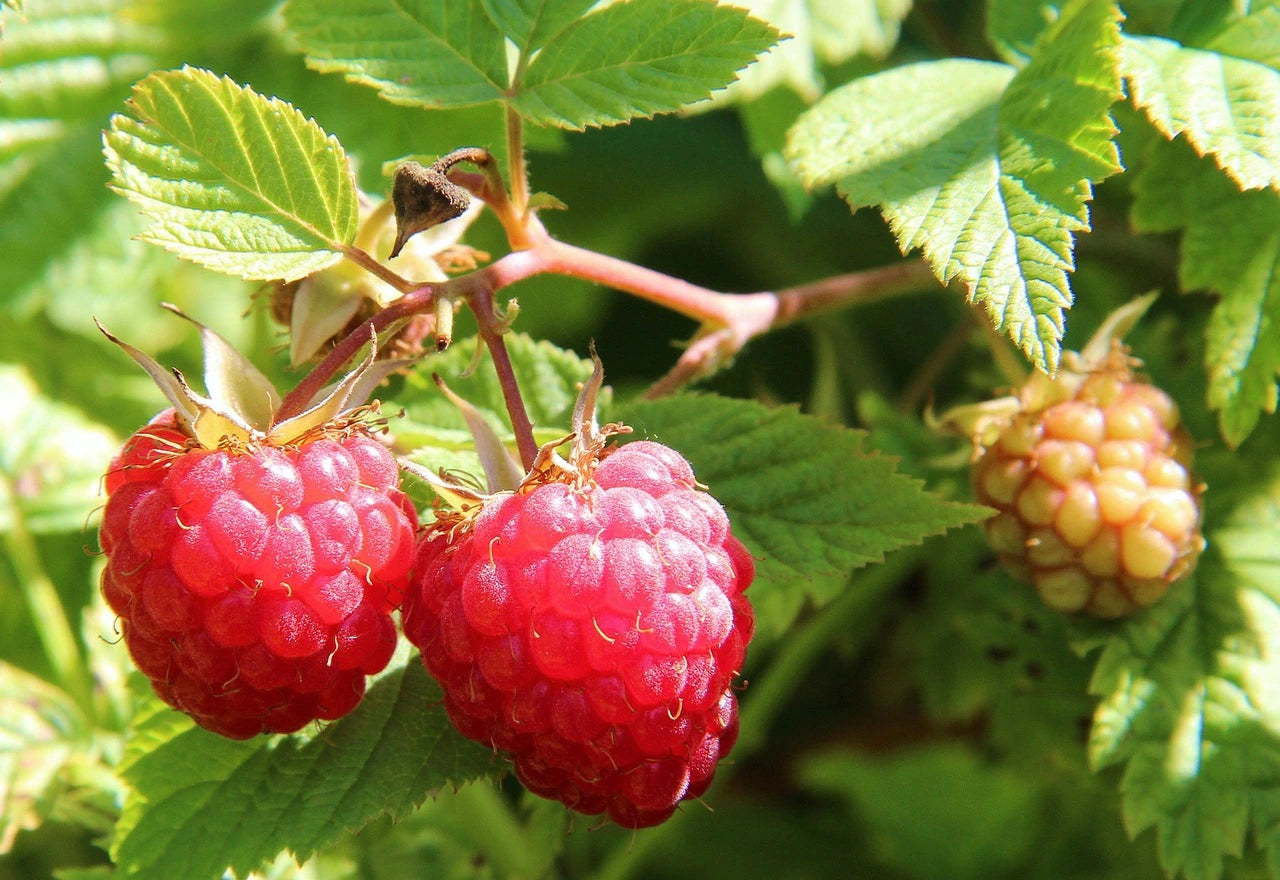
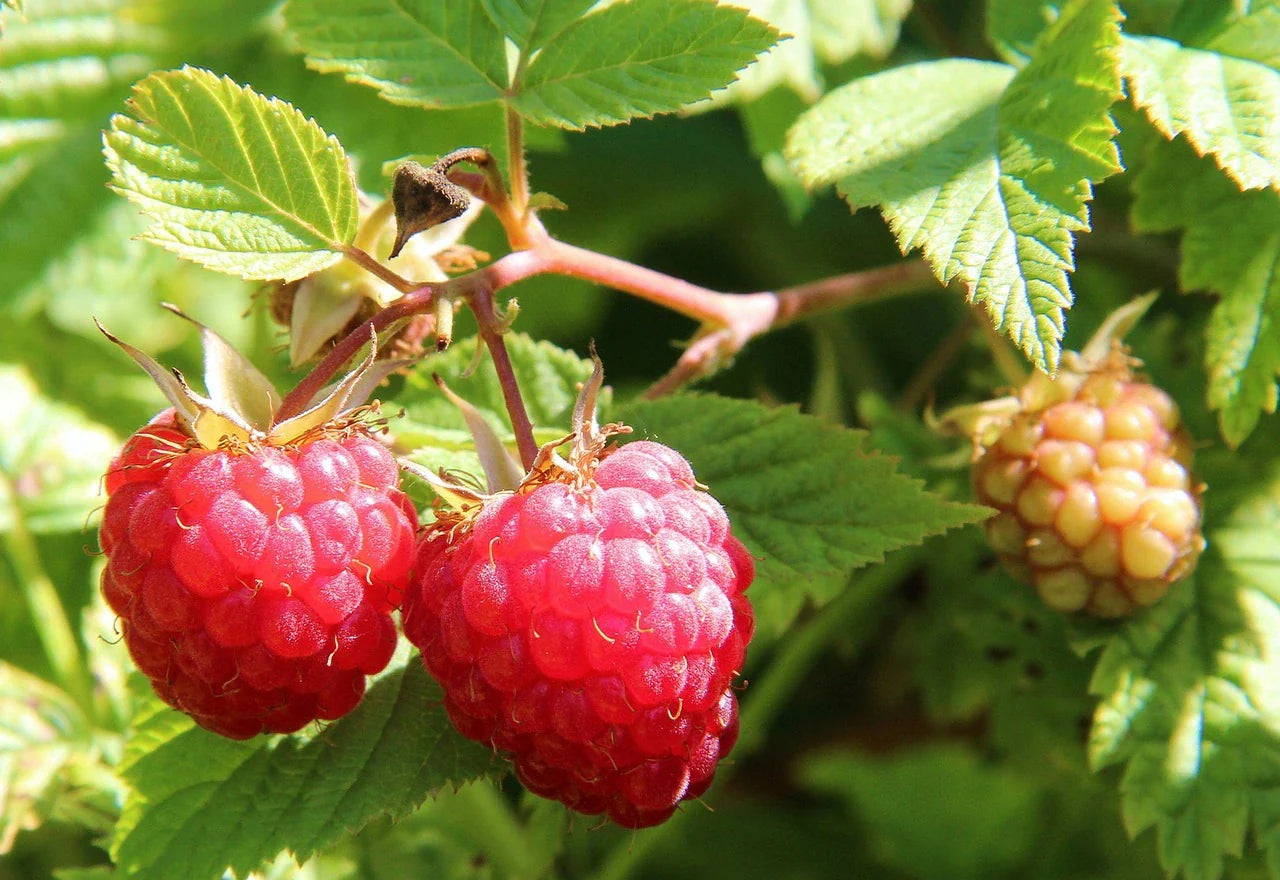
Raspberry bush and raspberries
The raspberry (Rubus idaeus) is a shrub of the Rosaceae family, native to Europe and temperate Asia . It forms clumps of upright branches that can reach 1 to 2 meters in height, with biennial stems armed with small prickles . The raspberry, its fruit, is made up of small juicy drupes which easily detach from the receptacle when ripe .
In France, raspberries are mainly marketed for fresh consumption, with growing consumer demand . They are also used in the food industry for making jams, syrups, and as an ingredient in dairy products and pastries. French production, estimated at 4,500 tonnes per year, only meets 15% of national consumption, thus offering development opportunities for local producers in the face of imports .
Evolution of the raspberry market
The French raspberry market has experienced significant growth in recent years, both conventionally and organically. The area cultivated with conventional raspberries has increased, reaching 675 hectares in 2023, with national production increasing by 5.5% to reach 6,300 tonnes . This growth reflects growing demand from French consumers for this fruit.
In the organic sector, despite a general downward trend in areas under conversion for fruit (-37% in 2023), small fruits, including raspberries, have shown particular resilience. Organic fruit areas increased by 11% between 2020 and 2021, with a notable increase of 4% for pome and stone fruits . However, the organic market faces challenges, including a decline in areas under conversion, which could impact the future growth of the sector .
Current raspberry market
The French raspberry market is experiencing positive dynamics, with national production increasing by 5.5% reaching 6,300 tonnes in 2024 . The conventional sector dominates, representing approximately 470 hectares out of the total 600 hectares cultivated . On the organic side, despite a general slowdown in the market, small fruits are holding up better, with 130 hectares of organic raspberries . Observed trends include:
- Growing consumer demand, particularly for fresh raspberries
- Competitive pressure from imports, particularly from Portugal
- Growing interest in everbearing varieties and soilless cultivation techniques
- A slight drop in prices due to increased supply in certain sectors
Despite these challenges, the French raspberry market offers opportunities for development, particularly due to the self-supply rate of 86% leaving room for improvement .
Raspberry-producing regions
The main raspberry-producing regions in France are Rhône-Alpes, Provence-Alpes-Côte d'Azur and Auvergne . The Dordogne is also known for its raspberry production . These regions offer ideal climatic conditions with hot summers and well-drained soils, promoting high-quality production .
Raspberry plants adapt to various soil types, but prefer light, humus-rich, and slightly acidic soils . They require sunny or slightly shaded exposure . In areas prone to spring frosts, growers often favor everbearing varieties and south-facing locations . Lower Saxony, for example, has managed to extend its harvest season from May to September thanks to new cultivation methods, an approach that could inspire other French regions to optimize their production.
Raspberry growing techniques
The main raspberry varieties grown in France include ' Tulameen ', ' Heritage ', 'Polana' and 'Festival' . These varieties are valued for their productivity and adaptation to local conditions.
Agronomic requirements:
- Soil: light, deep, well-drained, pH 5.6-6.2, rich in organic matter
- Climate: cold temperate, optimum temperature 20-22°C
- Irrigation: drip system recommended, high and regular needs
- Density: 1.10 m between plants, 2-3 m between rows
Average yields in conventional farming are around 3800 kg/ha, compared to 3550 kg/ha in organic farming . Production begins 1-3 years after planting depending on the variety . A well-maintained plantation can produce for 10-20 years, with renewal recommended every 7-12 years for optimal production .
Imports and international competition
France occupies a modest position in the international raspberry market, with a national production of around 6,300 tonnes in 2024 . This production only covers 14% of French consumption, the country being heavily dependent on imports .
French raspberry imports have increased considerably in recent years, reaching almost 25,000 tonnes, or 86% of the raspberries consumed in the country . The main suppliers are Spain (32% of volumes), Portugal (29%) and Morocco (22%) . This foreign competition puts significant pressure on French producers, particularly in terms of price and year-round availability. However, it also stimulates innovation and improvement in the quality of French raspberries to stand out on the domestic market.
Opportunities for French producers
The French raspberry market offers significant opportunities for producers, both conventional and organic. In the conventional sector, growing consumer demand, with an average annual increase of 9.8% in purchases between 2016 and 2021, creates significant development potential. Producers can diversify by integrating raspberry cultivation into their operations, particularly strawberry producers who already benefit from expertise in small fruits . Industrial outlets, such as processing for jams and dairy products, also offer growth prospects.
For the organic market, despite a general slowdown, small fruits like raspberries are holding up better . Producers can benefit from institutional aid for converting to and maintaining organic farming. Consumer demand for local and sustainable products is growing, as evidenced by the 7.2% increase in sales in specialist organic stores in the first quarter of 2024 . Organic producers can also exploit specific marketing channels such as online markets and organic baskets, thus meeting a growing demand for fresh and quality products .
Profitability and financial aid
Raspberry production shows significant differences between conventional and organic methods. In conventional production, average yields are 8 to 12 tonnes per hectare, compared to 6 to 8 tonnes in organic production . This difference is explained by constraints specific to organic farming, particularly in terms of pest and disease management.
Production costs are generally higher in organic, with products 20 to 30% more expensive than their conventional equivalents . However, profitability can be improved through higher selling prices for organic raspberries. Farmers can benefit from various financial aids, including the organic conversion aid (CAB) of 350 euros per hectare for annual crops . In addition, a new €90 million support plan for organic farming was announced, offering aid capped at €30,000 per farm, increased to €40,000 for young farmers . These measures aim to support the transition to more sustainable agriculture and to achieve the objective of 18% of agricultural land being organic by 2027 .
Raspberry Market Challenges
Raspberry production in France faces several major challenges. In the conventional market, competition from imports, particularly from Portugal and Spain, is exerting significant pressure on prices . Growers also face significant pest risks, such as Drosophila suzukii and Botrytis, which can cause significant crop losses . Price volatility, influenced by fluctuations in supply and demand, represents an additional challenge for farm profitability.
In the organic sector, constraints are accentuated by strict regulations limiting the use of certain phytosanitary products . Higher production costs, particularly labor, which accounts for up to 70% of total costs, reduce competitiveness against imports. In addition, increased competition in the organic market, with a proliferation of labels and a loss of consumer confidence, complicates the differentiation of French products. These challenges require constant adaptation of growing practices and business strategies to maintain the economic viability of French raspberry farms.
Innovations and future perspectives
The raspberry sector in France is experiencing a promising dynamic of innovation. Research is underway to develop varieties that are more resistant to disease and adapted to changing climatic conditions . The integration of agroecological practices, such as participatory selection and dynamic population management, is gaining ground, allowing better local adaptation of varieties . These approaches could improve the resilience and sustainability of raspberry crops.
In the medium term, the raspberry market is expected to experience significant growth, with an estimated compound annual growth rate (CAGR) of 21.73% between 2025 and 2032 . This growth will likely be driven by growing demand for natural and functional food products, as well as expanding applications in the food and beverage industry . The adoption of innovative processing technologies, such as freeze-drying, and the growing demand for organic raspberries are also expected to shape the future of the market .
Recommendations for market gardeners
Raspberry cultivation presents interesting opportunities for French market gardeners, but requires careful consideration before embarking on the venture.
Benefits :
- Strong demand from the French market, with growth potential
- Possibility of income diversification
- High added value, particularly in organic and short supply chains
- Innovative cultivation techniques to optimize production
Disadvantages:
- Significant initial investment (trellising, irrigation)
- Labor-intensive crop, especially for harvesting
- Susceptibility to diseases and pests
- Competition from imports
Recommendations:
- Carefully assess available resources (labor, irrigation, investment)
- Favor varieties adapted to the terroir and resistant to diseases
- Consider growing under cover to extend the season and improve quality
- Develop short marketing channels to maximize added value
- Learn specific raspberry growing techniques
- Consider organic certification to meet growing demand
A phased approach, starting with a small area, will allow the viability of this crop to be tested before possible development on a larger scale.
Raspberry plant suppliers
For professional market gardeners looking for quality raspberry plants or advice on planting a new plot, two specialist suppliers stand out on the French market:
Bairiverse ( https://plantspetitsfruits.com/ ) offers a wide range of small fruit plants, including raspberry plants, suitable for the needs of professionals. Their offer includes plants in mini-plugs, pots, pots and bare roots, available in organic and conventional versions . With delivery within 15 days throughout France, Bairiverse is committed to providing quality plants from producers selected for their reliability .
Econome à Légumes ( https://economealegumes.fr/ ) positions itself as a trader in plants and plant material offering attractive producer prices . Their responsive sales team can help you choose the varieties best suited to your project and advise you on the optimal technical routes for growing raspberries . They also offer deliveries directly to your farm, making it easier to set up your plot .