Quick read / the essentials on the best raspberry varieties for market gardeners
Choosing the best raspberry variety is a strategic issue for professional market gardeners . Between hardiness, yield, taste quality and ease of management, each variety has specific advantages. The Marastar raspberry impresses with its record productivity (up to 3 kg/plant), while the Tulameen raspberry seduces with its excellent taste quality and resistance to diseases . As for the Heritage raspberry , it combines double harvest , good resistance to cold and general robustness , with a regular yield of around 2 kg/plant.
At Bairiverse , a specialist wholesale supplier of small fruit plants , we know that the profitability of a farm depends on varietal choices adapted to each terroir. Whether you are looking to buy Heritage raspberry plants to maximize your productivity over a long period, or to diversify your offer with varieties like Fallgold or Sucré de Metz , our expertise guides you.
As a specialist wholesale supplier of small fruit plants , we offer professional batches, technical advice and optimized logistics to help you secure your plantations . For a sustainable, versatile and efficient operation, buying Heritage raspberry plants is a relevant choice, whether for direct sales, processing or long-term supply chain.
High-tasting raspberries: a strategic lever for professional market gardeners
For professional market gardeners , the taste quality of raspberries is an essential selection criterion that can significantly influence customer loyalty and justify a higher selling price. Several varieties are particularly distinguished by their exceptional organoleptic qualities .
The Tulameen raspberry plant is unanimously recognized for its "excellent taste quality" with fruits that offer "a sweet and fragrant flavor, with powerful aromas that make them particularly appreciated by consumers." This Canadian variety produces large, elongated, light-colored raspberries, whose very fragrant flavor makes it a reference on the market. Its firm flesh and optimal sugar-acidity balance make it a premium product that clearly stands out from the competition.
For producers looking to diversify their offerings with original flavors, the Fallgold raspberry tree has a unique taste profile . Its "yellow raspberries are very sweet and have no acidity," which is an undeniable commercial asset to differentiate themselves on the markets. This everbearing variety produces "golden yellow fruits with excellent taste qualities, sweet and without acidity," particularly appreciated by consumers looking for new taste experiences .
The Sucré de Metz variety , as its name suggests, is distinguished by its "particularly sweet fruits, with a juicy texture that will delight gourmets" . This old French variety offers an excellent balance between sugar and aromas , ideal for direct sales where taste quality is particularly valued .
For market gardeners looking for varieties that combine productivity and taste , the Versailles raspberry tree offers "voluminous" fruits with an "excellent balance between sugar and acidity" . Its early harvest allows quality raspberries to be offered from mid-June, thus attracting a clientele eager for seasonal products .
The Lloyd George variety , although old, "is unanimously acclaimed for its sweet, fruity and very fragrant taste" , demonstrating that traditional varieties retain their relevance in a market that is increasingly demanding in terms of organoleptic qualities .
Key factors to optimize taste quality
To optimize this superior taste quality , several cultural factors must be controlled:
-
Harvest when fully ripe , when the fruits come off easily
-
Avoid excessive irrigation which would dilute the flavors
-
Adapt fertilization to promote sugar accumulation
-
Favor short supply chains to offer freshly picked fruit
This taste excellence also opens up diversified development prospects for market gardeners: premium direct sales, partnerships with gourmet restaurants, or processing into high-end products such as coulis, sorbets or artisanal jams. As professionals in the sector point out: "We probably have the best raspberry variety on the market" , a powerful commercial argument for producers who choose varieties with high taste value .
Extreme cold-resistant raspberries: a strategic choice for market gardeners in harsh climates
Cold resistance is a determining criterion for professional market gardeners, particularly in the northern regions of France where winter temperatures can be harsh. This varietal characteristic directly influences the sustainability of plantations and the profitability of farms .
The cold hardiness phenomenon in raspberries develops in three distinct phases: autumn acclimatization , maximum hardening in mid-winter , and spring deacclimatization . This physiological dynamic is essential for growers to understand because frost damage occurs primarily when plants are not fully acclimatized, particularly in early or mid-winter.
Among the varieties noted for their hardiness, the Heritage raspberry stands out for its ability to withstand extremely low temperatures, down to -30°C . This exceptional resistance makes it a preferred choice for continental French areas where harsh winters can compromise other, less hardy cultivars.
The Zeva raspberry plant also deserves the attention of growers looking for varieties adapted to cold climates , thanks to its natural hardiness and resistance to diseases . This double protection against abiotic and biotic stresses makes it a secure investment for farms located in risk areas.
For regions with less severe but still cold winters, the Tulameen raspberry offers resistance down to -26°C (USDA zone 4a-8a) , although some sources limit its hardiness to -15°C. This Canadian-origin variety benefits from genetics naturally adapted to harsh winter conditions.
Cultural practices to strengthen cold resistance
Cold resistance is not solely determined by varietal genetics , but can be significantly improved by appropriate cultural practices . Experts recommend several strategies to strengthen this resistance:
-
Grow on ridges to better protect plants from frost damage
-
Install strategic windbreaks to limit the impact of cold, drying winds
-
Practice post-harvest irrigation to ensure good hydration before winter
-
Avoid excess nitrogen which promotes late growth more vulnerable to frost
-
Maintain a good level of carbohydrates in the plant through healthy foliage
-
Ensure an optimal phytosanitary profile to strengthen the general vigor of the plants
It is important to note that raspberry canes are generally 2 to 15°C more resistant to cold than buds. This difference in sensitivity explains why some varieties can survive very harsh winters while suffering damage to their productive potential .
An interesting physiological phenomenon concerns the diameter of the canes : although the percentage of sugars is initially lower in large diameter canes, their level remains more stable during the dormant period, unlike in small diameter canes where this rate drops more quickly in mid-winter. This particularity can guide the choices of pruning and training to optimize winter resistance .
For market gardeners keen to protect their production against climatic hazards , investing in highly cold-resistant varieties is an effective risk management strategy , ensuring the sustainability of plantations and consistent yields , even in the most difficult winter conditions.
Heritage raspberry: productivity and robustness for professional market gardeners
The Heritage Raspberry is an essential reference for professional market gardeners seeking an optimal balance between yield, hardiness and taste quality . This ever-bearing variety of American origin offers the considerable advantage of a double annual production : a first harvest in June-July followed by a second, more abundant one, from August to October. This extended production cycle allows producers to benefit from spreading their income over an extended period.
With an average yield estimated at 700 g per m² , or approximately 1.5 to 2 kg per mature plant , Heritage is positioned as a high-productivity variety . This performance, coupled with its regularity of production year after year , makes it a profitable investment for market gardens. The fruits, of medium size and rounded shape , have a firm and juicy flesh particularly suited to fresh marketing as well as processing .
The agronomic value of Heritage also lies in its remarkable resistance to diseases , significantly reducing phytosanitary interventions and associated costs . This hardiness , combined with its natural vigor and upright habit , facilitates cultivation while minimizing health risks . The vigorous canes, however, require suitable training to support the fruit load and optimize light exposure .
For market gardeners keen to diversify, Heritage offers the added benefit of remarkable versatility : its fruit is suitable for fresh consumption , as well as for making coulis, jams or freezing . This adaptability allows the entire production to be used , even during peak harvest periods, thus reducing potential losses .
In terms of planting, this variety adapts to different types of soil , although it prefers well-drained, organic-rich and slightly acidic soils . Its developed root system and strong suckering ensure good crop longevity , with a productive lifespan of up to several years subject to proper maintenance.
For producers committed to an organic approach , Heritage is a particularly relevant choice thanks to its tolerance to biotic and abiotic stresses . Its ability to adapt to different soil and climate conditions makes it a safe variety for farms transitioning to more sustainable practices .
Marastar raspberry: the ultra-productive variety for professional market gardeners
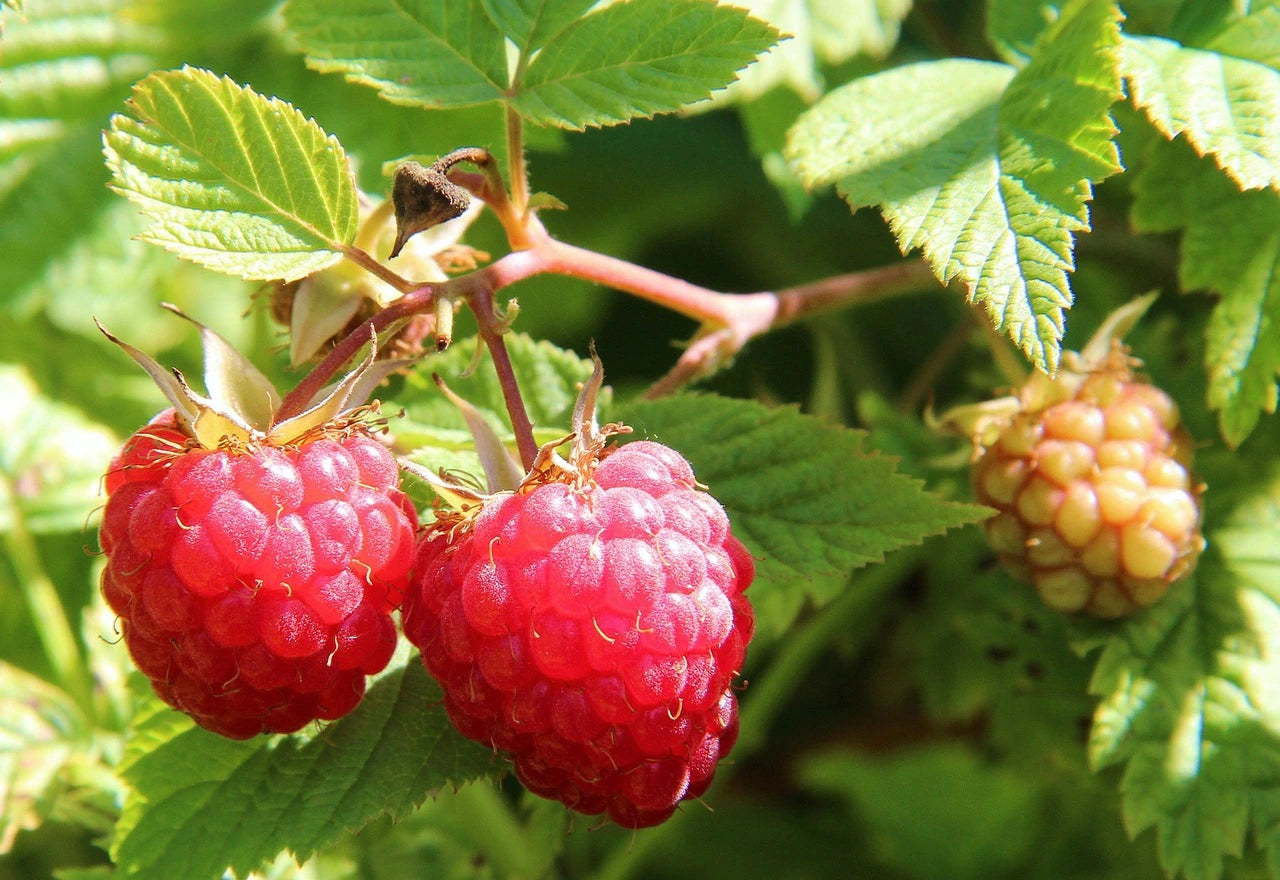
The Marastar raspberry plant has established itself as the essential benchmark in terms of productivity for professional market gardeners. This French everbearing variety , developed by the breeder Marionnet, stands out for its exceptional yield, which can reach up to 3 kg per mature plant , a performance significantly higher than the average for other commercial varieties.
What particularly characterizes the Marastar is its ability to produce continuously from July until the first frosts , thus offering an extended marketing period that is particularly advantageous for market gardening operations. This production is carried out on the shoots of the year , allowing simplified management of winter pruning - it is sufficient to cut all the canes at ground level to encourage fruiting the following year.
Marastar fruits have exceptional commercial characteristics : large size (around 5 g per raspberry), conical shape , an intense and shiny purple red . Their firm texture and excellent post-harvest shelf life are major assets for marketing in both short and long supply chains . In terms of taste, these raspberries are distinguished by their sweet flesh and pronounced aroma , perfectly meeting the expectations of consumers looking for authentic flavors .
Beyond its remarkable productivity, Marastar has good tolerance to common raspberry diseases , particularly powdery mildew , thus reducing phytosanitary interventions and associated costs . This natural resistance makes it an ideal candidate for organic farming operations , where the prevention of health problems is a major issue.
From a cultural point of view, this variety is characterized by its vigor and compact bushy shape , reaching 1 to 1.5 meters in height and an equivalent width. This naturally contained architecture facilitates row training and optimizes space use , a determining factor for the profitability of market gardening operations . Its vigorous root system also makes it well adapted to different types of soil , although it fully expresses its potential in rich, humus-rich and well-drained soils .
For market gardeners keen to diversify, Marastar offers remarkable versatility : its fruits are suitable for fresh sale , processing (jams, coulis, pastries) or freezing . This adaptability allows the entire production to be used and adapts to market fluctuations .
Ultimately, the Marastar Raspberry represents a highly profitable investment for market gardening professionals, combining exceptional productivity , superior taste quality and ease of management - three essential criteria for optimizing the profitability of a fruit farm .
Tulameen Raspberry: A Disease-Resistant Variety for Professional Market Gardeners
The Tulameen Raspberry stands out for its remarkable resistance to the main diseases affecting raspberry crops, a major asset for professional market gardeners keen to minimise phytosanitary interventions and optimise their profitability .
This Canadian variety , selected in 1989 in British Columbia, has "very good resistance to common raspberry diseases" , particularly against botrytis and powdery mildew . This natural health robustness makes it possible to significantly reduce preventive and curative treatments , representing a considerable economic advantage for market gardening operations, particularly those engaged in an organic approach .
However, there are a few areas of caution to note. Tulameen is somewhat susceptible to Phytophthora and sting blight , as well as being vulnerable to severe winter cold (below -15°C). In southern regions , careful monitoring is recommended, as the Nouvelle-Aquitaine Plant Health Bulletin reports that "it is the 'Tulameen' variety, a sensitive variety, which is most affected" by certain pathologies at the end of the season.
Good cultural practices to strengthen the resistance of Tulameen
To maximize this natural resistance , several cultural practices are recommended to market gardeners:
-
Favor planting in well-drained soil to limit the risks of Phytophthora
-
Ensure good ventilation of the plants by suitable training
-
Adapt the exposure according to the regions – the Tulameen “prefers fresh soil and a sunny location” . For the hottest regions, it is advisable to place the Tulameen raspberry in the shade.
-
Carry out rigorous winter pruning by "removing dead branches" to limit potential sources of infection
This disease resistance , combined with its other agronomic qualities – large fruit (around 10 grams), excellent taste quality and good post-harvest conservation – makes Tulameen a strategic choice for professional market gardeners . Its sanitary robustness not only allows for reduced production costs related to treatments, but also secures the yield , estimated at between 8 and 10 tonnes per hectare , thus guaranteeing better economic predictability for the farm.
To summarize: What is the best raspberry variety for market gardeners?
There is no single perfect variety , but a range of choices depending on your growing priorities. For a spread harvest and excellent hardiness , the Heritage raspberry remains a safe bet, particularly in cold areas or in organic farming. The Marastar raspberry , meanwhile, offers exceptional yield potential , ideal for intensive farms. The Tulameen raspberry shines with its premium taste qualities and good health , suitable for high-end markets.
Bairiverse , your specialist wholesale supplier of small fruit plants , offers you a complete catalog, selected to meet the requirements of French market gardeners. Are you looking to buy Heritage raspberry plants to secure your yields over the long term? Are you considering expanding your range with rare varieties like Fallgold or heritage varieties like Sucré de Metz ? We'll support you every step of the way.
Thanks to our recognized know-how, Bairiverse , a specialist wholesale supplier of small fruit plants , offers you certified plants, technical expertise and personalized service. To make the right choices and invest in reliable and profitable varieties, buying Heritage raspberry plants remains one of the safest levers for combining agronomic performance, taste quality and adaptability to the terrain.