Tayberry Mulberry Variety Fact Sheet
-
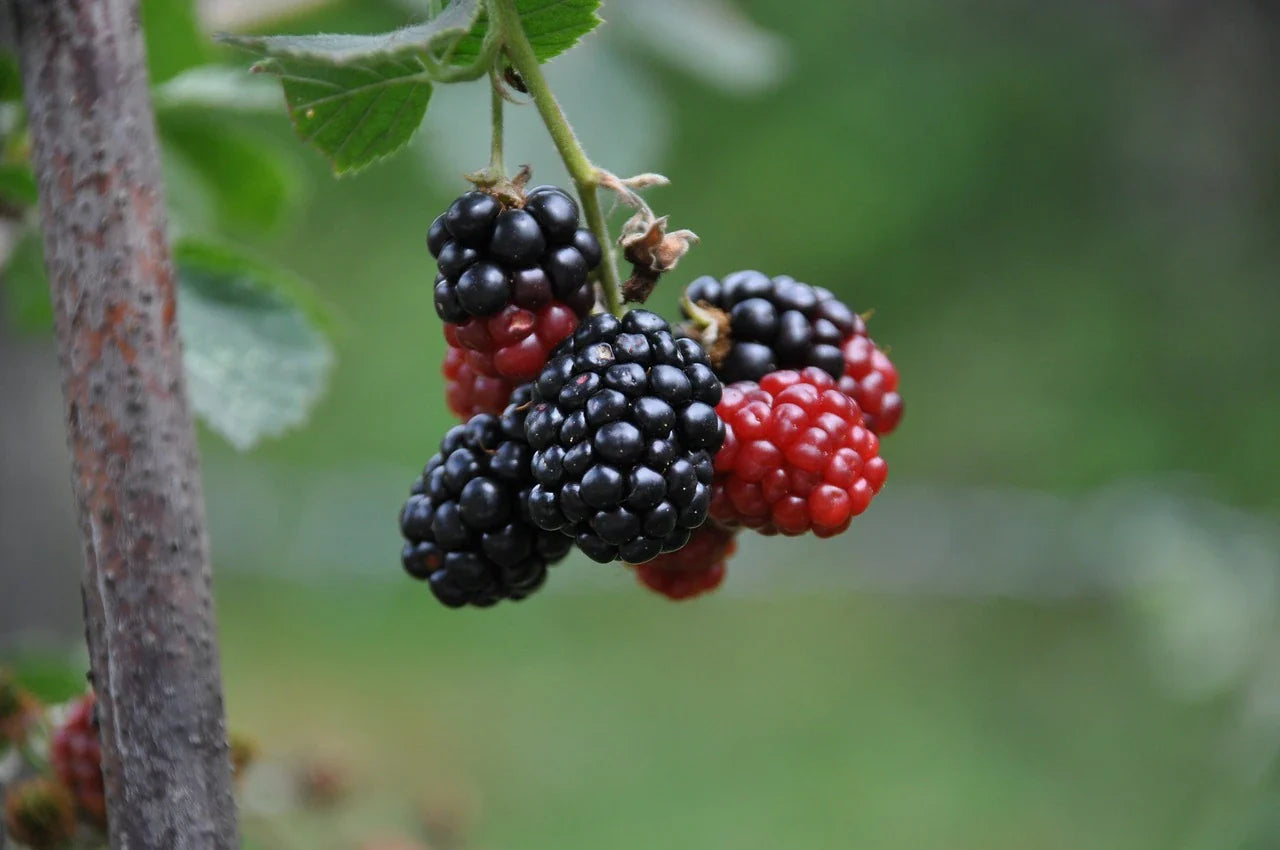
Fruit color at maturity: Red to reddish-purple, sometimes blackish-red for certain cultivars
-
Fruit shape: Elongated, conical
-
Fruit size: Large (3 to 5 cm long)
-
Plant type: Vine
-
Adult height: 1.5 to 2.5 meters
-
Adult width: 1 to 2 meters
-
Fruit ripening period: July to August
-
Fruit Taste: Mild, sweet, and very aromatic flavor, with a slight acidity. Flavor combining notes of raspberry and blackberry, considered sweeter and less acidic than loganberry. Juicy texture and firm flesh.
-
Earliness of the variety: Mid-season
-
Fruiting period: July to August, over a period of 3 to 5 weeks. Non-remontant.
-
Disease resistance and storage: Good disease resistance. Sensitive to very harsh winters (hardiness down to -18°C to -20°C). Fresh fruit is fragile and has a short shelf life.
-
Variety yield: Very productive, several kilos per plant
-
Is this variety self-fertile? Yes
-
Commercial use: Fresh consumption (specialty markets, direct sales), processing (jams, jellies, compotes, sorbets, pastries). Processing is strongly recommended due to the fragility of fresh fruit.
-
Comments: A hybrid between the blackberry (Rubus fruticosus) and the raspberry (Rubus idaeus). Requires training due to its vine-like habit. Hand-harvesting is recommended as the fruit does not detach easily for mechanical harvesting.
Quick read / Tayberry essentials
The Tayberry mulberry, a cross between a raspberry and a bramble, is increasingly attracting demanding producers looking for a small, aromatic fruit with high added value. Thanks to its vigor, productivity, and unique flavor combining blackberry and raspberry, it represents an interesting opportunity for agricultural diversification. At Bairiverse , a specialist wholesale supplier of mulberry plants , we offer Tayberry plants carefully selected for their robustness, yield, and adaptability to French soils.
Versatile, the Tayberry is equally well suited to fresh sale and processing: jams, compotes, pastries or even high-end catering. Its elongated conical fruits (up to 5 cm), very aromatic, display an excellent juice rate (75 to 80%) and a good sugar content (around 10 °Brix). The harvest begins in July and spreads over three weeks, offering a favorable commercial window.
Its exceptional vigor requires rigorous training, but its ease of management (self-fertile variety, good disease resistance, correct hardiness) makes it an asset of choice for arborists wishing to stand out. For a profitable and differentiating orchard, it is better to rely on a recognized partner. This is why Bairiverse , a specialist wholesale supplier of mulberry plants , supports you with its expertise and a professional stock ready to plant.
Don't wait any longer to buy Tayberry plants with confidence. Buying Tayberry plants from Bairiverse means investing in quality, safety, and performance. For any technical inquiries or quotes, our team is here to guide you.
Introducing the Tayberry Mulberry Variety
The Tayberry variety is a hybrid resulting from the cross between a raspberry (Rubus idaeus) and a blackberry (Rubus fruticosus). Created in Scotland in the 1970s by breeder Derek L. Jennings, it takes its name from the River Tay which runs through this region. This hybrid mulberry is aimed at professionals looking for a vigorous, productive and aromatic variety, suitable for both fresh consumption and artisanal or industrial processing.
Fruit characteristics
Tayberry fruits are recognizable by their elongated conical shape , reaching up to 5 cm in length and weighing an average of 5 to 8 g per berry. The skin color changes from dark red to blackish at maturity, indicating the right time for harvesting. The flesh , although poorly documented, is believed to be dark red to purple, consistent with the external pigmentation.
In terms of taste, Tayberry seduces with its balanced flavor , at once smooth, sweet and tangy , combining the aromas of blackberry and raspberry. It is described as very aromatic and fragrant , which makes it particularly sought after in niche markets. The average Brix level is around 10 °Brix , and the juice content reaches 75 to 80% of the fruit weight, making it ideal for processing.
The fruits, although they have a better shelf life than raspberries , remain fragile and sensitive to crushing , with limited fresh storage . Their receptacle is kept at harvest , which ensures better stability, particularly for short supply chains. The harvest is spread over three weeks from the beginning of July.
Vegetative and agronomic behavior
Tayberry is distinguished by its high to very high vigor . Its growth habit is vine-like to climbing , requiring training on wires or trellises. This training promotes good ventilation, limits disease and facilitates harvesting. Without support, production decreases sharply and the fruits are more exposed to the risk of rot.
The plant reaches a height of 1.5 to 2.5 m and a spread of 1 to 2 m at maturity. Its growth is rapid and requires controlled management to ensure good vegetative balance.
Tayberry is a non-remontant variety , producing on two-year-old branches. It is self-fertile , which simplifies orchard management: no pollinator is required to obtain good fruiting. The white flowering extends from late April to late May and attracts pollinators, thus contributing to the biodiversity of the plot.
Resistance and adaptability
Tayberry has good disease resistance , including low susceptibility to powdery mildew . It is also relatively pest resistant , making it a robust variety under controlled cultivation. Drought resistance is good to moderate , satisfactory for well-established plants, but watering may be necessary under conditions of prolonged water stress.
In contrast, Tayberry is moderately hardy , generally tolerating temperatures down to -18°C , with some records down to -30°C, although this is exceptional. It is more susceptible to winter frost than other hybrid blackberries such as 'Chester' or 'Loch Ness', so it is important to choose locations protected from cold winds and late frosts.
The root system is mainly superficial , with the majority of roots located between 10 and 40 cm deep . This makes the plant susceptible to surface drought and root asphyxiation , especially in poorly drained soil. Mulching and good soil preparation are recommended.
Tayberry prefers permeable, slightly acidic to neutral soils (pH 5.5 to 7) . It can show some sensitivity to limestone , particularly in the form of iron chlorosis in highly calcareous soil.
Propagation and rootstocks
The variety is generally propagated on its own roots (franc), by cuttings or layering , simple methods well suited to professional cultivation. Grafting remains rare and is only used in specific cases (difficult soils, vigor constraints). In this case, rootstocks from the genus Rubus are recommended.
Production and commercial outlets
Tayberry is renowned for its abundant productivity , with an average yield of 3 to 5 kg per mature plant under optimal conditions. It can be grown in specialist orchards or integrated into production diversification systems.
Manual harvesting is more difficult than for other blackberries or raspberries, due to the fruit being firmly attached to the stalk , which slows down picking. This characteristic limits mechanization and directs the variety towards short circuits and high added value farms .
Tayberry is particularly suitable for fresh consumption , artisanal or industrial processing (jams, compotes, jellies, syrups, pastries, juices, frozen products) and niche markets such as gourmet restaurants or delicatessens.
Conclusion
Tayberry stands out as a high-quality hybrid mulberry variety, suitable for professionals looking for flavor, hardiness, and originality . Thanks to its vigor , disease resistance , and multiple uses , it represents an excellent option for specialized producers and processors looking for a profitable and differentiating alternative to more classic blackberry and raspberry varieties. Careful cultural management, particularly in terms of training and site selection, allows you to get the most out of it.
To summarize: Tayberry Mulberry
Tayberry represents a powerful alternative to traditional blackberries and raspberries. This hybrid mulberry, the result of a cross between Rubus idaeus and Rubus fruticosus, offers an exceptional balance between productivity, hardiness, and flavor. With its conical fruits that can weigh up to 8g, rich in juice and very aromatic, it appeals to both niche markets and short supply chains. Its harvest, spread over three weeks from July, helps smooth sales and optimize outlets, particularly in artisanal or gourmet processing.
Thanks to its high vigor, self-fertility and good resistance to diseases (especially powdery mildew), Tayberry fits perfectly into a sustainable cultivation approach. However, it requires rigorous training and well-drained soil to express its full potential. At Bairiverse , a specialist wholesale supplier of mulberry plants , we select robust plants, propagated on their own roots, adapted to French agricultural conditions.
Buying Tayberry mulberry plants from Bairiverse means benefiting from technical support, a professional-quality stock, and expertise dedicated to small fruits. We make it a point of honor to provide growers with high-performance and profitable plants, with monitoring tailored to each project.
Whether you are a producer looking for diversification or a processor looking for premium fruit, trust Bairiverse , a specialist wholesale supplier of mulberry plants , to buy Tayberry mulberry plants with complete peace of mind.