Bare root Redcurrant plants for Professional Growers
Buy now and get it delivered when you're ready to plant
-
Organic Versaillaise blanche Redcurrant bare root 5-8 Branches - 60-80cm - plant for Growers
Regular price €5,20 EURRegular priceUnit price per -
Organic Blanka Redcurrant bare root 5-8 Branches - 60-80cm - plant for Growers
Regular price €5,20 EURRegular priceUnit price per -
Organic Gloire des sablons Redcurrant bare root 5-8 Branches - 60-80cm - plant for Growers
Regular price €5,20 EURRegular priceUnit price per


Gooseberry Market in France in 2025
The French currant market offers promising opportunities for market gardeners, with growing demand for local and organic products, supported by favorable trends in the agri-food, cosmetics, and dietary supplement sectors. However, this crop also presents challenges, including international competition, climatic hazards, and high production costs, requiring tailored strategies to maximize profitability and meet market expectations.
Currants: Presentation and Uses
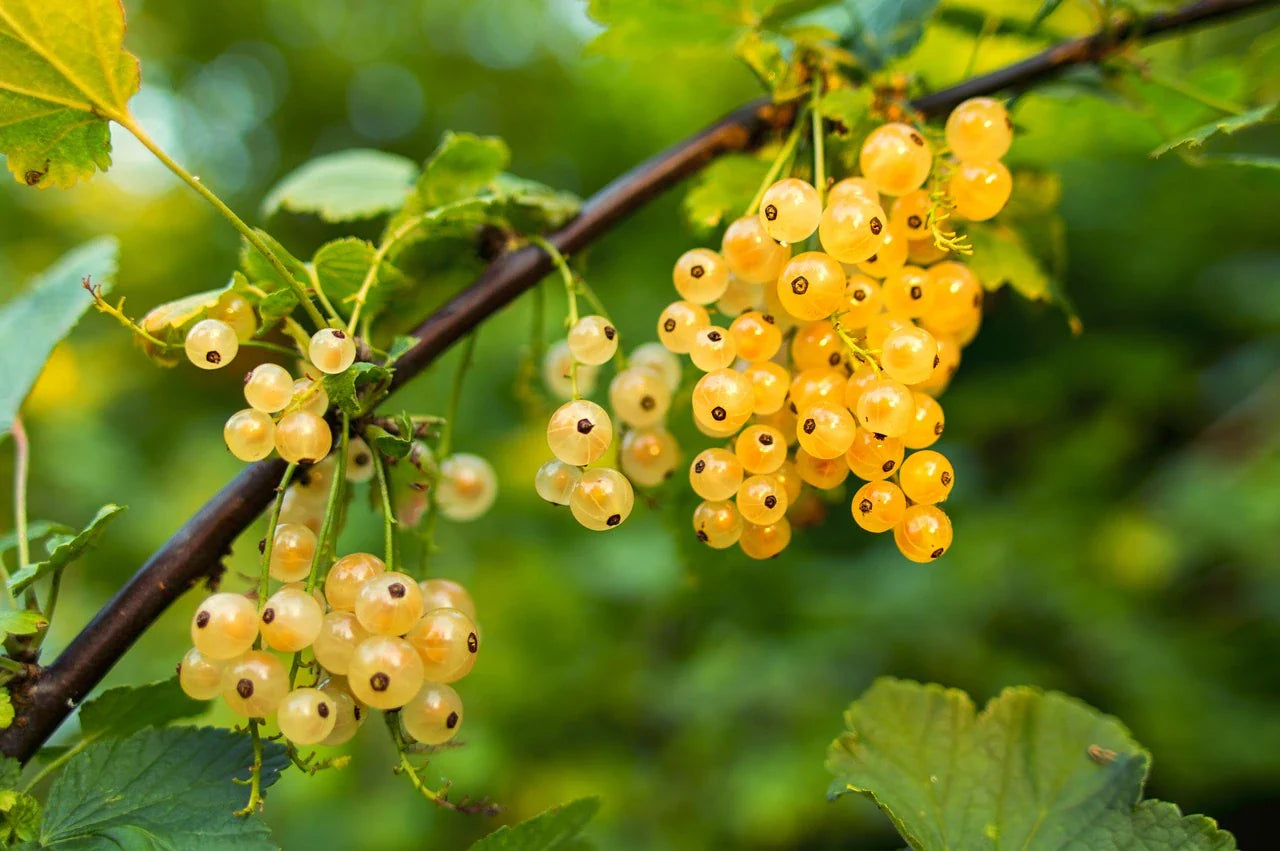
The gooseberry is a bushy shrub that can reach 1 to 2 meters in height, native to the temperate regions of Europe and Asia . Its fruits, currants, are small red, pink or white berries which grow in clusters of 7 to 20 grains . They have a tangy, sweet flavor, with a shiny, translucent skin .
In France, currants are mainly used in the food industry for the production of jams, jellies and syrups, thanks to their richness in pectin . They are also very popular in baking and dessert decoration . The hospitality sector remains an important outlet, but retail sales are becoming increasingly important, especially in winter . Gooseberries are also made into fruit puree or frozen for use throughout the year .
- Main varieties cultivated in France:
- Jonkher von tets (bright red)
- Glory of the Sands (pale pink)
- White Versailles
Evolution of the Gooseberry Market
The French currant market has seen mixed trends over the past three years. In conventional agriculture, cultivated areas have remained relatively stable, with a slight decrease of 2% between 2022 and 2024 . Production volumes fluctuated depending on weather conditions, with 2023 being a particularly difficult year due to late frost episodes.
The organic market is seeing more positive momentum. The area cultivated with organic currants increased by 9% between 2022 and 2024, in line with the general growth trend in the organic sector in France. This increase is due to growing consumer demand for local and organic products, as well as producers' efforts to diversify their crops. However, organic production volumes remain modest, representing around 14% of total currant sales in France .
- Key points:
- Relative stability of the conventional market
- Significant growth in the organic market (+9% in surface area)
- Production fluctuations linked to climatic hazards
- Growing demand for local and organic products
Current Market Status
The French currant market in 2024 shows contrasting trends between conventional and organic farming. In conventional agriculture, cultivated areas have stabilized at around 1,900 hectares . Conventional production remains dominant, but faces profitability challenges due to competition from neighboring countries such as the Netherlands .
For the organic market, we observe a positive dynamic with an increase in certified areas of 8% in 2023 . New organic farms focus in particular on vegetables and berries . This growth is supported by increased consumer demand for local and organic products, particularly following the health crisis . However, organic production volumes remain modest, representing around 5% of total fruit and vegetable sales . Organic redcurrant prices remain high, with average prices around €23-24/kg for 125g punnets, which may slow consumption but offers opportunities for added value for producers.
Regions and Terroirs of Groseilliers
Hauts-de-France stands out as the leading gooseberry producing region in France, representing 27% of cultivated areas . This region benefits from a cool climate and humus-rich soils that are favorable to growing gooseberries. The Oise region specializes in blackcurrants, while the Aisne region is renowned for its raspberries . Nord-Pas-de-Calais and Somme offer a diversified production of red fruits, including currants.
Other regions such as the Rhône Valley, the Loire Valley and the Côte d'Or also cultivate gooseberries . Gooseberry bushes adapt well to the cool climates of the north of the Loire and to mid-mountain areas, withstanding temperatures down to -25°C . However, they are sensitive to late spring frosts and require cool, well-drained, slightly acidic soils for optimal growth .
- Regional specificities:
- Hauts-de-France: cool climate, humus-rich soils
- Mountainous regions: adaptation to low temperatures
- Southern regions: cultivation in partial shade recommended
Gooseberry Growing Techniques
The main varieties of redcurrants grown in France are 'Jonkheer Van Tets' (bright red, early), 'Versaillaise blanche' (translucent white fruits) and 'Gloire des Sablons' (pale pink) . These shrubs prefer rich, well-drained, slightly acidic soil, with sunny or partially shaded exposure . Irrigation is crucial in spring and summer to ensure good fruiting . The recommended planting density is approximately 1 plant every 1 to 1.5 meters.
Average yields vary between 5 and 8 kg per plant in conventional cultivation, slightly lower in organic farming. Gooseberry bushes come into production in the second year after planting and can remain productive for 15 to 20 years with proper maintenance . Regular pruning, particularly the removal of branches over 4 years old, is essential to maintain productivity .
International Trade and Competition
France occupies a modest position on the international currant market, ranking 6th among European producers with less than 2,000 tonnes per year . World production is dominated by Russia (420,000 tonnes) and Poland (160,000 tonnes) . French imports of currants remain limited, with around 1,000 tonnes per year, mainly from Poland and the Netherlands .
Unlike other small fruits such as raspberries or blueberries, whose imports have increased by more than 100% in recent years, the French redcurrant market remains relatively stable . However, competition from neighbouring countries, particularly Poland, is weighing on the profitability of French producers . This competitive pressure is encouraging domestic producers to turn to higher value-added products, such as organic currants or high-quality processed products, to stand out in the market .
Opportunities for French Producers
The French currant market offers interesting opportunities for producers, both in the conventional and organic sectors. In the conventional sector, diversification into value-added processed products such as artisanal jams or cold-pressed juices represents growth potential. Industrial outlets, particularly in the food and cosmetics industries, are expanding with the increasing use of redcurrant extracts in food supplements and care products .
The outlook for the organic market is particularly promising. Consumer demand for local and organic products continues to grow, providing opportunities for producers to grow . Institutional aid, such as the 94 million euro emergency fund and the increase in the budget of the Organic Agency, support the transition and the promotion of organic products . In addition, the organic fruit and vegetable segment in specialist stores is showing growth of 8.4%, demonstrating sustained interest in these fresh products . Producers can also explore the growing market for organic food supplements, which grew by 2.3% in the last quarter .
Profitability and Financial Aid
There are significant differences in currant production between conventional and organic farming. In organic farming, production costs can be up to 22% higher, mainly due to the specific inputs and additional labor required . However, organic yields are generally 20 to 40% lower than conventional . Despite these differences, the potential profitability of gooseberries remains interesting, with gross margins of up to 700-1000 kg per 1000 m² per year and an average fresh selling price of 14 to 20 euros per kg .
To support the transition to organic farming and crop diversification, several aid schemes are available. Farmers can benefit from aid for conversion (CAB) and maintaining organic farming, as well as an organic tax credit increased to €3,500 . In addition, a support fund of 90 million euros has been set up in 2024 for organic farms in economic difficulty . Producers can also access investment aid from Regional Councils, Water Agencies and ADEME for organic sector development projects .
Sector Challenges and Risks
The market for currants, both conventional and organic, faces specific challenges. In conventional production, competition from low-cost imports, particularly from Poland and the Netherlands, puts pressure on prices . Phytosanitary risks, such as anthracnose and powdery mildew, can significantly affect yields . For organic production, high production costs (around 75% of the total cost) and the fragility of the fruit (storage limited to 48 hours at 10°C) pose logistical and economic challenges . Strict regulations and organic certification costs are also significant constraints . In addition, competition from low-cost imported frozen products threatens direct sales of fresh organic fruit . These combined factors make the organic currant market particularly sensitive to fluctuations in demand and prices.
Innovations and Future Perspectives
The gooseberry sector is experiencing significant advances in innovation and research. Participatory breeding programs aim to develop more hardy and locally adapted population varieties, thus meeting the specific needs of organic farmers . These new genetically heterogeneous varieties offer greater resilience to environmental variations and are part of an agroecological approach.
In the medium term, the gooseberry market is expected to witness sustained growth, driven by the increasing demand for natural and functional products. The gooseberry extract industry, in particular, is expected to reach USD 0.95 billion by 2032, at a CAGR of 9.85% . This growth will be driven by the increased use of gooseberry in food supplements, cosmetic products and functional foods, responding to the consumer trend towards healthier and more natural products .
Recommendations for French Market Gardeners
The integration of gooseberry cultivation presents significant advantages for French market gardeners, including a growing demand for local and organic products, as well as opportunities for diversification towards value-added products . However, this culture also brings challenges, such as competition from low-cost imports and high production costs, particularly in organic farming .
For an informed decision, market gardeners should:
- Favor disease-resistant varieties to reduce phytosanitary treatments .
- Optimize soil fertility through regular additions of organic matter to improve yields .
- Consider growing under cover to extend the season and protect against adverse weather conditions .
- Explore processing opportunities (jams, juices) to enhance production and reduce losses .
- Consider organic certification to benefit from a growing market and conversion aids .
By adopting these strategies, French market gardeners can take advantage of the potential of growing gooseberries while minimizing the associated risks.
Plant Suppliers and Advice
To obtain quality gooseberry plants or advice on planting a plot, two specialist suppliers stand out:
Bairiverse ( https://plantspetitsfruits.com/ ) offers a wide range of small fruit plants, including gooseberries, tailored to the needs of professionals. Their offer includes plants in mini-plugs, pots and containers, available in organic and conventional versions . Bairiverse stands out for its commercial responsiveness and technical expertise, offering personalized support from varietal selection to planting .
Econome à Légumes ( https://economealegumes.fr/ ) is a trader in plants and plant material offering aggressive prices directly to producers . Their range includes gooseberry plants and other small fruits, with deliveries guaranteed throughout France. Econome à Légumes also offers technical advice and personalized support to optimize your crops .
These two suppliers guarantee quality plants, fast delivery and technical support adapted to the needs of professional market gardeners.
Which Variety of Gooseberries Should You Choose? Characteristics and Uses of Gooseberries
How to choose your variety of Gooseberry bushes?
You would like to plant Gooseberry bushes on your plot but you don't know which variety of Gooseberry bushes to grow Which grapes to choose? This guide to currant varieties Grappes lists the main varieties along with their characteristics and uses. For farm sales, supermarket sales, or processing? There's something for everyone.
If you are looking for another variety of Gooseberry Grapes do not hesitate to contact us: contact us
Our ranges of Gooseberry bushes Clusters :
Organic Gooseberry Range for Professionals
Conventional Gooseberry Bush Range for Professionals
Gooseberry Variety Guides Clusters :
| Variety | Fruit Color | Remontante | Precocity | Productivity | Fruit Size / Shape | Disease Resistance / Hardiness | Fruiting Period | Taste | Self-fertile |
|---|---|---|---|---|---|---|---|---|---|
| Jonkheer Van Tets | Bright Red | Non-Rising | Early | Very productive variety | Medium to large fruit cluster | Vigorous variety with good disease resistance, adapts to poor soil and is very cold resistant. | June-July | Juicy berries with a sweet taste. Suitable for fresh or for making jam, for example. Its juice is quite dark. The skin is a little thick. | Yes |
| Junifer | Bright red | Non-Rising | Early | Very productive variety | Long bunches | Little need for cooling, suitable for the south of France | End of June to End of July | Perfect for processing because it is rich in pectin, which makes it easier to make jam. | Yes |
| Laxton's Perfection | Dark red | Non-Rising | Season | Very productive variety | Large bunches. Large fruit. | recommended in northern or continental regions with cold winters, good hardiness and disease resistance but average vigor | July | Pleasantly fragrant, sweet and tangy with firm fruit | Yes |
| London Market | Light red | Non-Rising | Mid-Season | Excellent yield. Can reach around 7 kg per plant in optimal conditions. | Long, compact clusters. Large fruit. Round berries. | Very hardy and vigorous variety. Resists down to -15°C. Good disease resistance. Do not plant on plains south of the Loire. | Mid-July to Mid-August | Juicy and tangy pulp, rich in pectin, therefore ideal for processing | Yes |
| Rovada | Red | Non-Rising | Late | Very large production, easy to pick, reliable production, picking can be delayed because the fruit stays on the plant well | Long bunches | Resists fungal and leaf diseases. Attracts bees and butterflies. | End of July to End of August | Very tasty. Fragrant and slightly tangy. Suitable for fresh or processing. | |
| Wilder | Red | Non-Rising | Season | Very productive | Long bunches, medium size | Good disease resistance | July | Very tasty fruit, good sugar-acid balance | Yes |
| Mulka | Dark red | Non-Rising | Late | Very productive | Small berries, long clusters | Moderately vigorous but possible in mountain cultivation because it is very late. Needs soil enriched with organic matter. | August | Very sweet and aromatic fruit | Yes |
| Glory of the Sablons | Light Pink | Non-Rising | Late | Productive variety | Long bunches, medium size | Vigorous variety. Not suitable for calcareous soils. Resists diseases well and down to -20°C. Not very susceptible to diseases except pest attacks. | Mid-July to End of August | Sweet and slightly acidic flavor | Yes |
| Champagne Rose | Pink | Non-Rising | Mid-Season | Good production | Numerous medium-sized clusters | Adapts to all types of soil. Vigorous variety. | Mid-July to Mid-August | Sweet and mild flavor | |
| Bar Le Duc | White | Non-Rising | Late | Average productivity | Medium-sized, narrow cluster | Hardy and moderately vigorous variety | End of July to End of August | Contains very few seeds. Can be used fresh or in processing: sorbet, jam, pastry juice, quite acidic and fragrant. | Yes |
| White Cherry | White-Pink | Non-Rising | Late | Good production. Easy to pick. | Long clusters. Medium-sized fruit. | Good disease resistance but moderately vigorous | End of July to End of August | Firm fruit. Tangy and fragrant taste. Juicy. Very good fresh | Yes |
| Red Lake | Red | Non-Rising | Late | Very productive, easy to pick | Long bunches | Highly resistant to diseases such as powdery mildew and anthracnose | Mid-July to End of August | Good sugar-acid ratio. Very fragrant. Slightly tart. | Yes |
| Red Start | Red | Non-Rising | Very late (after Red Lake) | Good performance | Long clusters. Medium-sized fruit. | Mid-August to late August | Good acidic flavor. Very good for making into jellies. | Yes | |
| Rolan | Bright red | Non-Rising | Season | Very productive variety. Easy to pick. | Long clusters. Medium-sized fruit. | Very disease-resistant variety. High cold requirements. Suitable for harsh winters. | July to August | Very tasty. Slightly tangy. Medium aromatic. Suitable for all uses (fresh or processed) | Yes |
| Rondom | Pale red | Non-Rising | Late | Very productive. Easy to pick. Known for its yield. | Firm fruit. Large, regular-sized berries. Firm | Hardy variety. Good tree retention. High light requirements. Strong immune system. | Mid-July to End of August | Exceptional flavor. Perfect for making into a pie. | Yes |
| Rosetta | Bright red color. Perfect for decoration because of its beautiful color. | Non-Rising | Late | Very productive | Large fruit | The fruit may burst in hot weather after heavy rain | Mid-July to End of August | Perfect for making red fruit coulis or jam. Acidic taste | Yes |
| Rotet | Bright red | Non-Rising | Very late | Reliable variety. Good productivity every year. | Medium to large fruit | Hardier than average variety. Resists splitting after rain. | Mid-August to late August | Very sour taste. Perfect for processing and decoration. | Yes |
| Blanka | Yellow-whitish | Non-Rising | Season | Good productivity (between 6 and 11KG per shrub) | Medium-sized fruit | Very disease resistant but susceptible to powdery mildew | July to August | Juicy and fresh with large seeds | Yes |
| Primus | Translucent white | Non-Rising | Season | High-yielding variety | Medium to large fruit | Retains its quality for a long time on the tree, then takes on a pinkish color. Resistant to diseases but slightly susceptible to mildew | Mid-June to Mid-July | Acidic and juicy. Suitable for fresh or juicy consumption. One of the sweetest white currant varieties. Variety very rich in Vitamin C. | Yes |
| Werdavia | Light Yellow | Non-Rising | Season | Variety with excellent yield potential | Very large bunches | Hardy variety. Very disease resistant. Will withstand cold down to -22°C | July to August | Very tasty and rich in vitamin C. Sweet, tangy and fragrant taste | Yes |
| White Dutchwoman | White tinged with pink | Non-Rising | Late | Variety that offers a good yield | Large berries, long bunches | Reliable variety. Disease resistant. | Mid-July to End of August | Sweet and fragrant flavor. Ideal for fresh consumption. | Yes |
| White Versailles | Translucent white with amber reflection | Non-Rising | Season | Productive variety, easy to harvest | Numerous short bunches, medium-sized fruit | Good disease resistance. Frost resistant down to -15°C. Adapts to all soil types except those with excessive chalkiness. | July to August | Juicy and sweet pulp | Yes |
| Zitavia | Yellow-whitish berries | Non-Rising | Season | High-yielding variety. Up to 7 kg per year/bush | Long bunches, large berries | Variety with fruits that remain on the tree for a long time. Resistant to rain and various diseases. Adapts to all soils. | July to August | Very sweet compared to red berries, juicy and very tasty. Perfect fresh or processed. | Yes |
Planting and harvesting calendar for Gooseberries
When to plant gooseberries? When to harvest gooseberries?
Are you looking to start growing gooseberries but don't know when to plant them? Are you also wondering when you'll be harvesting your gooseberries ?
On this page you will find the planting and harvesting periods for each variety of red currant.
| Gooseberry Bushes | Jan | Feb | Mar | Apr | May | Jul | Jul | Aug | Sep | Oct | Nov | Dec | Harvest rate / Production yield | |||||||||||||
|---|---|---|---|---|---|---|---|---|---|---|---|---|---|---|---|---|---|---|---|---|---|---|---|---|---|---|
|
Gooseberry Bush Jonkheer Van Tets |
Planting | 1 year after planting: small harvest 2 years after planting: first yield |
||||||||||||||||||||||||
| Harvest | ||||||||||||||||||||||||||
|
Gooseberry Bush Junifer |
Planting | 1 year after planting: small harvest 2 years after planting: first yield |
||||||||||||||||||||||||
| Harvest | ||||||||||||||||||||||||||
|
Gooseberry Bush Laxton's Perfection |
Planting | 1 year after planting: small harvest 2 years after planting: first yield |
||||||||||||||||||||||||
| Harvest | ||||||||||||||||||||||||||
|
Gooseberry Bush London Market |
Planting | 1 year after planting: small harvest 2 years after planting: first yield |
||||||||||||||||||||||||
| Harvest | ||||||||||||||||||||||||||
|
Gooseberry Bush Rovada |
Planting | 1 year after planting: small harvest 2 years after planting: first yield |
||||||||||||||||||||||||
| Harvest | ||||||||||||||||||||||||||
|
Gooseberry Bush Wilder |
Planting | 1 year after planting: small harvest 2 years after planting: first yield |
||||||||||||||||||||||||
| Harvest | ||||||||||||||||||||||||||
|
Gooseberry Bush Mulka |
Planting | 1 year after planting: small harvest 2 years after planting: first yield |
||||||||||||||||||||||||
| Harvest | ||||||||||||||||||||||||||
|
Gooseberry Bush Glory of the Sablons |
Planting | 1 year after planting: small harvest 2 years after planting: first yield |
||||||||||||||||||||||||
| Harvest | ||||||||||||||||||||||||||
|
Gooseberry Bush Champagne Rose |
Planting | 1 year after planting: small harvest 2 years after planting: first yield |
||||||||||||||||||||||||
| Harvest | ||||||||||||||||||||||||||
|
Gooseberry Bush Bar Le Duc |
Planting | 1 year after planting: small harvest 2 years after planting: first yield |
||||||||||||||||||||||||
| Harvest | ||||||||||||||||||||||||||
|
Gooseberry Bush White Cherry |
Planting | 1 year after planting: small harvest 2 years after planting: first yield |
||||||||||||||||||||||||
| Harvest | ||||||||||||||||||||||||||
|
Gooseberry Bush Red Lake |
Planting | 1 year after planting: small harvest 2 years after planting: first yield |
||||||||||||||||||||||||
| Harvest | ||||||||||||||||||||||||||
|
Gooseberry Bush Red Start |
Planting | 1 year after planting: small harvest 2 years after planting: first yield |
||||||||||||||||||||||||
| Harvest | ||||||||||||||||||||||||||
|
Gooseberry Bush Rolan |
Planting | 1 year after planting: small harvest 2 years after planting: first yield |
||||||||||||||||||||||||
| Harvest | ||||||||||||||||||||||||||
|
Gooseberry Bush Rondom |
Planting | 1 year after planting: small harvest 2 years after planting: first yield |
||||||||||||||||||||||||
| Harvest | ||||||||||||||||||||||||||
| Rosetta Gooseberry | Planting | 1 year after planting: small harvest 2 years after planting: first yield |
||||||||||||||||||||||||
| Harvest | ||||||||||||||||||||||||||
|
Gooseberry Bush Rotet |
Planting | 1 year after planting: small harvest 2 years after planting: first yield |
||||||||||||||||||||||||
| Harvest | ||||||||||||||||||||||||||
|
Gooseberry Bush Blanka |
Planting | 1 year after planting: small harvest 2 years after planting: first yield |
||||||||||||||||||||||||
| Harvest | ||||||||||||||||||||||||||
|
Gooseberry Bush Primus |
Planting | 1 year after planting: small harvest 2 years after planting: first yield |
||||||||||||||||||||||||
| Harvest | ||||||||||||||||||||||||||
| Werdavia Grape Gooseberry Bush | Planting | 1 year after planting: small harvest 2 years after planting: first yield |
||||||||||||||||||||||||
| Harvest | ||||||||||||||||||||||||||
|
Gooseberry Bush White Dutchwoman |
Planting | 1 year after planting: small harvest 2 years after planting: first yield |
||||||||||||||||||||||||
| Harvest | ||||||||||||||||||||||||||
|
Gooseberry Bush White Versailles |
Planting | 1 year after planting: small harvest 2 years after planting: first yield |
||||||||||||||||||||||||
| Harvest | ||||||||||||||||||||||||||
|
Gooseberry Bush Zitavia |
Planting | 1 year after planting: small harvest 2 years after planting: first yield |
||||||||||||||||||||||||
| Harvest | ||||||||||||||||||||||||||
Jonkheer Van Tets Grape Currant: Planting and Harvesting Period
The Jonkheer Van Tets Gooseberry bush is planted from September to November or from February to May. The fruiting/harvesting period for the Jonkheer Van Tets Gooseberry bush is from June to July. The Jonkheer Van Tets Gooseberry bush is a non-remontant variety.
Junifer Grape Currant: Planting and Harvesting Period
Junifer Gooseberry is planted from September to November or from February to May. The fruiting/harvesting period for Junifer Gooseberry is from late June to late July. Junifer Gooseberry is a non-remontant variety.
Laxton's Perfection Gooseberry: Planting and Harvesting Time
Laxton's Perfection Gooseberry is planted from September to November or from February to May. The fruiting/harvesting period for Laxton's Perfection Gooseberry is in July. Laxton's Perfection Gooseberry is a non-everbearing variety.
Gooseberry Bush London Market: Planting and Harvesting Period
The London Market Gooseberry is planted from September to November or from February to May. The fruiting/harvesting period for the London Market Gooseberry is from mid-July to mid-August. The London Market Gooseberry is a non-everbearing variety.
Rovada Gooseberry Bush: Planting and Harvesting Period
The Rovada Gooseberry bush is planted from September to November or from February to May. The fruiting/harvesting period for the Rovada Gooseberry bush is from late July to late August. The Rovada Gooseberry bush is a non-remontant variety.
Wilder Gooseberry Bush: Planting and Harvesting Period
Wilder Gooseberry is planted from September to November or from February to May. The fruiting/harvesting period for Wilder Gooseberry is in July. Wilder Gooseberry is a non-remontant variety.
Mulka Gooseberry Bush: Planting and Harvesting Period
Mulka Gooseberry is planted from September to November or from February to May. The fruiting/harvesting period for Mulka Gooseberry is in August. Mulka Gooseberry is a non-remontant variety.
Gloire des Sablons Gooseberry Bush: Planting and Harvesting Period
The Gloire des Sablons Gooseberry bush is planted from September to November or from February to May. The fruiting/harvesting period for the Gloire des Sablons Gooseberry bush is from mid-July to the end of August. The Gloire des Sablons Gooseberry bush is a non-remontant variety.
Champagne Rose Gooseberry Bush: Planting and Harvesting Period
The Champagne Pink Gooseberry bush is planted from September to November or from February to May. The fruiting/harvesting period for the Champagne Pink Gooseberry bush is from mid-July to mid-August. The Champagne Pink Gooseberry bush is a non-remontant variety.
Bar Le Duc Grape Gooseberry Bush: Planting and Harvesting Period
The Bar Le Duc Gooseberry bush is planted from September to November or from February to May. The fruiting/harvesting period for the Bar Le Duc Gooseberry bush is from late July to late August. The Bar Le Duc Gooseberry bush is a non-remontant variety.
White Cherry Gooseberry Bush: Planting and Harvesting Period
The White Cherry Gooseberry bush is planted from September to November or from February to May. The fruiting/harvesting period for the White Cherry Gooseberry bush is from late July to late August. The White Cherry Gooseberry bush is a non-remontant variety.
Red Lake Gooseberry Bush: Planting and Harvesting Time
Red Lake Gooseberry is planted from September to November or from February to May. The fruiting/harvesting period for Red Lake Gooseberry is from mid-July to the end of August. Red Lake Gooseberry is a non-everbearing variety.
Red Start Gooseberry: Planting and Harvesting Period
Red Start Gooseberry is planted from September to November or from February to May. The fruiting/harvesting period for Red Start Gooseberry is from mid-August to the end of August. Red Start Gooseberry is a non-remontant variety.
Rolan Gooseberry Bush: Planting and Harvesting Period
The Rolan Gooseberry bush is planted from September to November or from February to May. The fruiting/harvesting period for the Rolan Gooseberry bush is from July to August. The Rolan Gooseberry bush is a non-remontant variety.
Rondom Gooseberry Bush: Planting and Harvesting Period
The Rondom Gooseberry bush is planted from September to November or from February to May. The fruiting/harvesting period for the Rondom Gooseberry bush is from mid-July to the end of August. The Rondom Gooseberry bush is a non-remontant variety.
Rosetta Gooseberry Bush: Planting and Harvesting Period
Rosetta Gooseberry is planted from September to November or from February to May. The fruiting/harvesting period for Rosetta Gooseberry is from mid-July to the end of August. Rosetta Gooseberry is a non-remontant variety.
Rotet Grape Gooseberry Bush: Planting and Harvesting Period
The Rotet Gooseberry bush is planted from September to November or from February to May. The fruiting/harvesting period for the Rotet Gooseberry bush is from mid-August to the end of August. The Rotet Gooseberry bush is a non-remontant variety.
Blanka Gooseberry Bush: Planting and Harvesting Period
Blanka Gooseberry is planted from September to November or from February to May. The fruiting/harvesting period for Blanka Gooseberry is from July to August. Blanka Gooseberry is a non-remontant variety.
Primus Gooseberry Bush: Planting and Harvesting Period
Primus Gooseberry is planted from September to November or from February to May. The fruiting/harvesting period for Primus Gooseberry is from mid-June to mid-July. Primus Gooseberry is a non-remontant variety.
Werdavia Gooseberry Bush: Planting and Harvesting Period
The Werdavia Gooseberry bush is planted from September to November or from February to May. The fruiting/harvesting period for the Werdavia Gooseberry bush is from July to August. The Werdavia Gooseberry bush is a non-remontant variety.
White Dutch Gooseberry: Planting and Harvesting Period
The White Dutch Gooseberry is planted from September to November or from February to May. The fruiting/harvesting period for the White Dutch Gooseberry is from mid-July to the end of August. The White Dutch Gooseberry is a non-remontant variety.
White Versaillaise Gooseberry Bush: Planting and Harvesting Period
The White Versaillaise Gooseberry is planted from September to November or from February to May. The fruiting/harvesting period for the White Versaillaise Gooseberry is from July to August. The White Versaillaise Gooseberry is a non-remontant variety.
Zitavia Gooseberry Bush: Planting and Harvesting Period
Zitavia Gooseberry is planted from September to November or from February to May. The fruiting/harvesting period for Zitavia Gooseberry is from July to August. Zitavia Gooseberry is a non-remontant variety.
French Small Fruit Market in 2025
The berry market in France offers promising opportunities for market gardeners in 2025, thanks to growing demand for these prized fruits, both fresh and processed. Despite challenges related to climatic hazards, international competition, and production costs, producers can take advantage of regional specificities, financial support, and varietal innovations to develop this high-value-added sector, particularly in organic and short supply chains.
Presentation and commercial uses
Small red fruits include various species such as raspberries , gooseberries , blackcurrants and blueberries . They are generally shrubs or bushes producing edible berries appreciated for their taste and nutritional qualities . Their main commercial uses in France are:
- Fresh produce sales in markets and supermarkets, in high demand during the summer season
- Processing into jams, coulis, syrups and other derivative products
- Use in baking and catering
- Direct sales on the farm and through short supply chains, promoting local production
- Supplying the food industry (yogurts, desserts, etc.)
These fruits benefit from a positive image among consumers, associated with taste pleasure and health benefits . Their cultivation makes it possible to enhance the value of small agricultural areas, offering interesting opportunities for market gardeners .
Recent market developments
The French berry market has seen mixed developments in recent years. For the conventional market, there has been a slight increase in cultivated areas, particularly in Bourgogne-Franche-Comté, which accounts for 44% of national blackcurrant production . However, volumes have fluctuated due to climatic hazards. Regarding organic, despite a general downward trend in areas under conversion (-28% in 2022), the organic berry sector has held up better thanks to sustained demand . Certified organic areas increased by 8%, reflecting growing consumer interest in local organic products .
- Conventional market: Slight increase in surface area, variable volumes
- Organic market: Growth in certified areas (+8%), decrease in conversions
- Growing demand for local and organic products
- Organic fruit and vegetable market share stable at 6.7% in volume and 7.9% in value in 2024
- Less marked decline in volume purchases for organic fruit and vegetables compared to conventional ones
Current market status
The French berry market is currently experiencing mixed dynamics. For the conventional market, cultivated areas remain stable, with a slight upward trend for certain species such as strawberries. Production volumes fluctuate depending on climatic conditions, but there is growing demand for tropical fruits such as avocados, whose consumption reached 150,000 tonnes in 2023 . The organic market, meanwhile, is experiencing a slowdown after years of strong growth. Certified organic areas for fresh fruit will represent 30,269 ha in 2022, with a notable drop in conversions (-23%) . Despite this decline, organic still represents 27% of the French fruit-growing agricultural area, demonstrating a resilient sector in the face of current economic challenges .
- Conventional: Stability of surfaces, increasing demand for certain exotic fruits
- Organic: 30,269 ha certified, slowdown in conversions but maintenance of a significant share (27% of the fruit UAA)
- General trend: Decrease in volumes purchased (-10% organic, -6% conventional), but increase in the average basket
Producing regions and terroirs
The production of small fruits in France is concentrated in several key regions, each with its own specificities:
- Hauts-de-France: Leading gooseberry producing region (27% of national areas) . Aisne specializes in raspberries, Oise in blackcurrants, and Nord-Pas-de-Calais in strawberries .
- Rhône-Alpes: Main production area for raspberries and redcurrants .
- Burgundy: Important for blackcurrant cultivation, particularly in the communes of Arcenant, Echevronne, Fussey .
- Loire Valley: Diversified production, including blueberries, raspberries and redcurrants .
- Aquitaine and Limousin: Major areas for blueberries .
Favorable regional specificities include:
- Acidic to neutral, well-drained soils for most small fruits .
- Temperate climate with good sunshine, crucial for the development of aromas .
- Altitude (e.g. 900m on average in Velay) allowing for deseasonal production .
These varied conditions allow France to cultivate a wide range of small fruits, adapted to local terroirs.
Cultural requirements and varieties
Small fruits require specific growing conditions for optimal production. The main varieties grown in France include Gariguette and Mariguette for strawberries, and Patriot for blueberries . These fruits generally prefer well-drained soils, rich in organic matter, with a slightly acidic to neutral pH (5.5-7.0) . Irrigation is crucial, especially for strawberries and raspberries, with a drip system recommended . Planting density varies depending on the species: 30 cm between plants for strawberries, 100-150 cm for blueberries . Yields in organic farming are generally 20-30% lower than conventionally grown. Most small fruits come into production 1-2 years after planting and remain productive for 5-10 years, depending on the species and care .
Foreign trade and competition
France occupies a modest position on the international berry market, with insufficient production to meet domestic demand. Imports play a crucial role, particularly for raspberries and blueberries, where only 15% of consumption is covered by French production . The main suppliers are Spain, Peru, Chile, and Mexico, whose combined share reaches 51.4% of fresh berry imports . This dependence on imports exerts competitive pressure on French producers, particularly in terms of price, with Spain, for example, producing tomatoes at 1 euro less per kilo . However, this situation also offers opportunities for the development of local production, particularly in short supply chains and organic, to meet the growing demand for quality French products .
Development opportunities
The French berry market offers significant opportunities for local producers, both conventional and organic. For the conventional market, diversification into berries represents a promising growth strategy, allowing the exploitation of new segments and reducing the risks associated with a single production . The growing imports of raspberries (+100%), blackberries (+150%) and blueberries (+500%) over ten years reveal significant development potential for national production .
In the organic sector, despite a recent slowdown, opportunities remain numerous. Institutional aid, such as the "Ambition Bio 2017" program, aims to double the area under organic farming . Consumer demand for local and traceable organic products remains strong, offering opportunities in short supply chains, supermarkets and artisanal processing. Producers can benefit from investment aid from various organizations such as Regional Councils or FranceAgriMer to develop their organic projects .
Profitability and financial aid
Organic berry production has production costs that are approximately 20 to 30% higher than conventional production, mainly due to higher labor costs and generally lower yields . However, the selling prices of organic berries are on average 44% higher than their conventional equivalents, which helps to offset these additional costs . Potential profitability remains attractive, with gross margins reaching €15,000 to €20,000/ha for certain species such as raspberries or blueberries, compared to alternative crops such as cereals .
To support this sector, several aid schemes are available. Conversion aid (CAB) and maintenance aid (MAB) offer financial support to organic producers, with amounts varying depending on the crops . The organic tax credit, increased to €3,500, is also available to farms generating more than 40% of their income from organic products . In addition, an exceptional support fund of 105 million euros has been set up in 2024 to help organic farms that have suffered economic losses, demonstrating the commitment of public authorities to this promising sector.
Sector challenges and risks
The market for both conventional and organic berries is facing significant challenges. In the conventional sector, international competition, particularly from Poland, is exerting strong pressure on prices . Climatic hazards can lead to production losses ranging from 30 to 70% depending on the plots, while phytosanitary risks increase with a limited number of approved products . In addition, the presence of pesticide residues in more than 70% of conventional fruits raises concerns among consumers .
For the organic market, the main constraints are linked to high production costs, resulting from a more labor-intensive cultivation method . Strict regulations involve regular inspections and costly certifications. Competition is intensifying in the organic market, with supply growing faster than demand, putting downward pressure on prices . Organic berries cost 30% to 50% more than their conventional counterparts, which may hinder their adoption by consumers .
Innovations and future perspectives
The berry sector in France is experiencing a promising dynamic of innovation. Research is focusing on developing varieties that are more disease-resistant and adapted to climate change, such as the ever-bearing Kwanza raspberry or the Sekoya Pop blueberry . Agroecological practices are gaining ground, with the increasing adoption of techniques such as dynamic population management and participatory selection, allowing for better local adaptation of varieties .
By 2030, the market is expected to experience sustained growth, driven by changing eating habits and growing demand for healthy, local products . The goal of some brands, such as Pink Lady, to reach 100 million annual European consumers by 2030 illustrates this potential . The integration of advanced technologies, such as nanotechnology and precision agriculture, is also expected to revolutionize farming practices, improving yields and fruit quality .
Recommendations for market gardeners
Growing small fruits offers interesting opportunities for French market gardeners, but requires careful consideration before embarking on the venture. Advantages include growing demand, potentially high margins, and the opportunity to diversify production . However, this crop presents challenges such as high installation costs, sensitivity to climatic hazards and increased international competition .
For an informed decision, here are some recommendations:
- Carefully assess your land and water resources, which are essential for the success of these crops .
- Start small to test different varieties and techniques before investing heavily .
- Favor short circuits and direct sales to maximize margins .
- Consider organic certification to meet the growing demand for local and organic products .
- Learn specific growing and disease management techniques for these delicate fruits .
- Explore the financial assistance available for organic installation and conversion .
By taking a step-by-step approach and leveraging local resources and available support, integrating berries can become a major asset for your market gardening operation.
Specialist suppliers and consultants
For professional market gardeners looking for quality berry plants or advice on planting a plot, two specialist suppliers stand out on the French market:
- Bairiverse ( https://plantspetitsfruits.com/ ): Wholesale supplier offering a wide range of small fruit plants in various formats (mini-balls, pots, pots). They offer organic and conventional plants, with a responsive sales service and fast delivery throughout France .
- Econome à Légumes ( https://economealegumes.fr/ ): Trader in plants and plant material, offering producer prices and direct delivery to the farm. They supply organic and conventional plants, with a focus on quality and customer service .
These two companies not only offer quality plants, but also personalized technical support, advice on the choice of varieties and growing routes adapted to your project. Their expertise can prove invaluable in optimizing your berry production .