Bare root Blackcurrant plants for Professional Growers
Buy now and get it delivered when you're ready to plant
-
Ben Alder Blackcurrant bare root 1 branch - plant for Growers
Regular price €0,75 EURRegular priceUnit price per -
Ben lomond Blackcurrant bare root 1 branch - plant for Growers
Regular price €0,75 EURRegular priceUnit price per -
Ben nevis Blackcurrant bare root 1 branch - plant for Growers
Regular price €0,75 EURRegular priceUnit price per -
Ben sarek Blackcurrant bare root 1 branch - plant for Growers
Regular price €0,75 EURRegular priceUnit price per -
Hedda Blackcurrant bare root 1 branch - plant for Growers
Regular price €0,75 EURRegular priceUnit price per -
Silvergieter's Zwarte Blackcurrant bare root 1 branch - plant for Growers
Regular price €0,75 EURRegular priceUnit price per -
Titania Blackcurrant bare root 1 branch - plant for Growers
Regular price €0,75 EURRegular priceUnit price per -
Tsema Blackcurrant bare root 1 branch - plant for Growers
Regular price €0,75 EURRegular priceUnit price per -
Wellington xxx Blackcurrant bare root 1 branch - plant for Growers
Regular price €0,75 EURRegular priceUnit price per -
Ben connan Blackcurrant bare root 1 branch - plant for Growers
Regular price €0,90 EURRegular priceUnit price per -
Wellington xxx Blackcurrant bare root 2 branches - plant for Growers
Regular price €0,90 EURRegular priceUnit price per -
Tsema Blackcurrant bare root 2 branches - plant for Growers
Regular price €0,90 EURRegular priceUnit price per


French Blackcurrant Market in 2025
In 2025, the blackcurrant market in France will be characterized by contrasting dynamics between conventional and organic sectors, with growing demand for local and sustainable products. Between diversification opportunities, agroecological innovations, and climate challenges, market gardeners can take advantage of this fruit, which has a wealth of diverse uses, while meeting consumer expectations for short supply chains and responsible practices.
Blackcurrant: Presentation and Uses
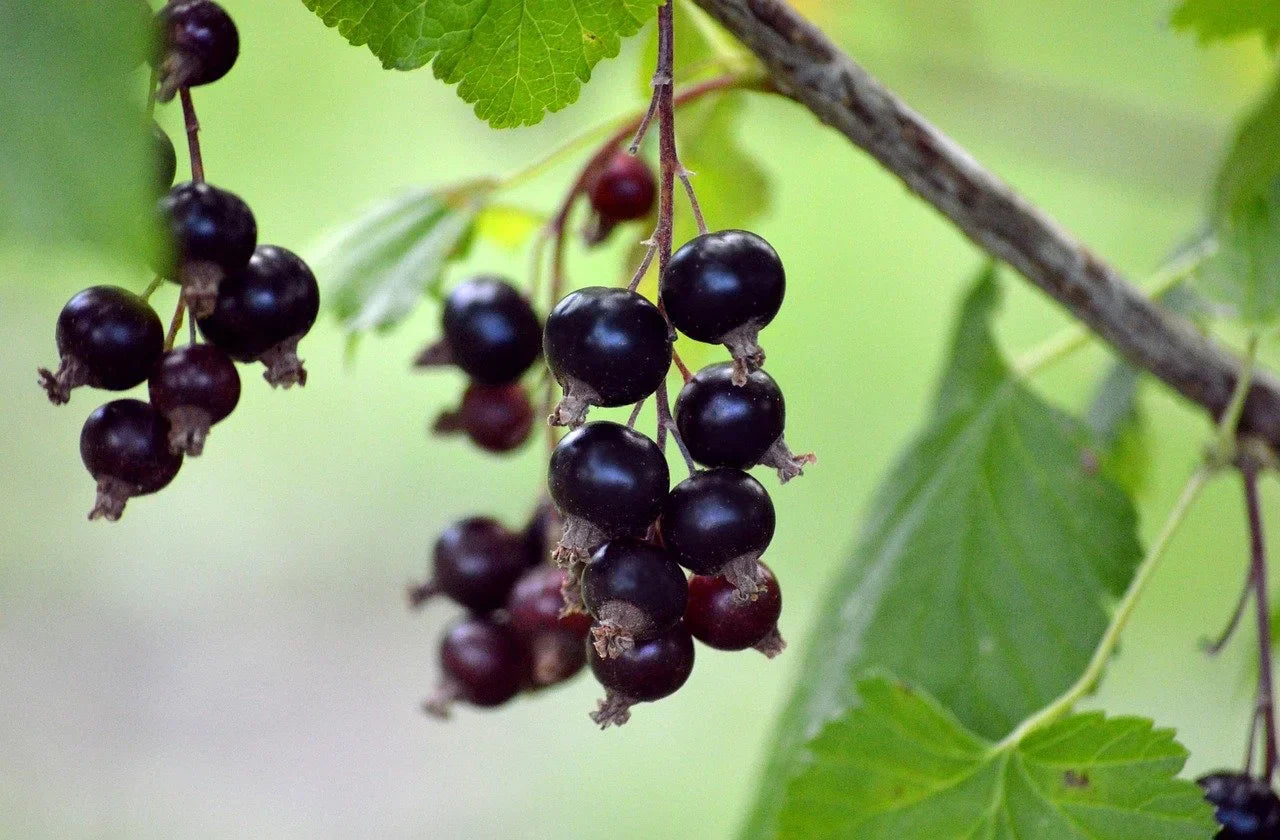
The blackcurrant (Ribes nigrum) is a fruit shrub of the Grossulariaceae family, native to Europe and northern Asia. It produces blackcurrant, a small black berry with smooth skin and a characteristic, slightly acidic and astringent taste . These fruits, rich in vitamins and antioxidants, are valued for their nutritional and medicinal properties .
In France, the main commercial uses of blackcurrant are:
- The production of liqueurs and crèmes de cassis, particularly for the production of kir
- The making of jams, jellies, syrups and juices
- Use in the food industry for dairy products, confectionery and infant formulas
- Extraction of essential oils for perfumery
- Herbal medicine, using leaves and fruits for their medicinal properties
Evolution of the Cassis Market
The French blackcurrant market has seen mixed developments in recent years. For the conventional market, cultivated areas have increased slightly, mainly in Bourgogne-Franche-Comté, which represents 44% of national production . However, volumes fluctuated due to climatic hazards. Regarding organic production, despite a general downward trend in conversion areas (-28% in 2022), the organic blackcurrant sector held up better thanks to sustained demand. Certified organic areas increased by 8%, reflecting growing consumer interest in local organic products.
- Conventional market: Slight increase in surface area, variable volumes
- Organic market: Growth in certified areas (+8%), decrease in conversions
- Burgundy-Franche-Comté: 44% of national production
- Growing demand for local and organic products
State of the Market 2025
The blackcurrant market in France in 2025 presents distinct trends between conventional and organic. In the conventional sector, there is a stabilization of cultivated areas, with approximately 3,000 hectares dedicated to blackcurrant production . Production volumes fluctuate around 10,000 tonnes per year, influenced by climatic conditions. The organic market, meanwhile, is experiencing moderate but constant growth. Certified organic blackcurrant areas increased by 5% compared to the previous year, reaching nearly 500 hectares . This increase is in line with the general trend in the organic sector, which now represents 10.4% of the French agricultural area . The growing demand for local and organic products is stimulating the development of short supply chains, particularly direct sales, which are seeing a 5% increase in the number of points of sale.
Regions and Terroirs Cassis
The main blackcurrant-producing regions in France are the Loire Valley (40% of national production), Burgundy, the Upper Rhône Valley and the Oise . Burgundy-Franche-Comté, the historic birthplace of blackcurrant, remains a dominant region with 44% of national production .
Each region has specific characteristics that are favorable to blackcurrant cultivation:
- Loire Valley: Temperate climate and well-drained clay-loam soils.
- Burgundy: Continental climate with cold winters, favorable to the dormancy of the blackcurrant bush. Limestone or marl soils, moderately deep and well drained .
- Upper Rhône Valley: Mediterranean to dry continental climate, with arid limestone soils .
- Oise: Degraded oceanic climate, suitable for growing blackcurrants .
Blackcurrant adapts well to cool, continental climates, requiring harsh winters for dormancy and resisting spring frosts .
Blackcurrant Growing Techniques
The main varieties of blackcurrant grown in France are Noir de Bourgogne , Andega , Titania and Ben Lomond . Blackcurrant adapts to a variety of soils but prefers fresh, moist, well-drained clay loams with an optimum pH of 6.0 . It requires a cool climate with harsh winters for dormancy .
Irrigation is crucial, especially during flowering and until flower bud initiation after harvest, with a need of approximately 25 mm of water per week . The recommended planting density is approximately 350 plants per 1000 m² . Average yields vary between 4 to 6 tonnes/ha in conventional farming and 3 to 4 tonnes/ha in organic farming . The blackcurrant bush comes into production after 2 years and can remain productive for more than 20 years with good maintenance .
International Blackcurrant Trade
France is the third largest producer of blackcurrants in Europe, behind Poland and the United Kingdom . However, French production, estimated at around 7,000 tonnes per year, remains modest on a global scale . Poland dominates the market with a production of 131,000 tonnes, followed by Russia which produces around 420,000 tonnes of blackcurrants and gooseberries combined .
French blackcurrant imports come mainly from Poland, which exports around 34,200 tonnes per year, including 1,400 tonnes to France . These imports, often in frozen form, compete directly with national production, particularly for supplying processing industries . This foreign competition puts pressure on the prices and margins of French producers, encouraging the sector to diversify towards products with higher added value such as purees, compotes and juices, which now represent 50% of outlets .
Cassis Market Opportunities
The blackcurrant market in France offers interesting opportunities for producers, both in the conventional and organic sectors. For the conventional market, the diversification of industrial outlets represents significant growth potential. While crème de cassis remains a flagship product, the growing demand for blackcurrant purees, compotes and juices opens up new perspectives . These processed products now represent 50% of outlets, offering greater added value to producers.
In the organic sector, growth is driven by increased consumer demand for local and sustainable products. Aid for organic conversion and support from regional institutions facilitate the transition to this mode of production . The specific demand for organic blackcurrants for the food supplement and natural cosmetics industry also offers high value-added opportunities. Producers can thus benefit from a rapidly expanding niche market, meeting consumer expectations in terms of health and well-being.
Profitability and Financial Aid
Blackcurrant production presents significant differences between conventional and organic methods, both in terms of costs and profitability. For installation, the total cost, including soil preparation, planting and irrigation, is estimated at approximately €8,307 per hectare . Annual maintenance and harvesting vary considerably: from €1,911 to €11,006 per hectare, depending on whether the harvest is mechanical or manual .
In terms of profitability, organic blackcurrants offer interesting prospects. With a planting density of around 350 plants per 1000 m², we can expect a yield of 600 kg and a potential gain of €3,100 for this area . Compared to other crops such as sunflower, whose average annual gross margin excluding aid is between €341/ha and €484/ha, blackcurrant appears to offer better potential profitability.
To support the transition to organic farming and diversification, several aid schemes are available. Conversion aid (CAB) and the Fonds Avenir Bio are interesting options for producers . Additionally, regional programs such as Rural Development Programs (RDPs) can offer additional support, particularly for agroecological practices such as hedge planting . Recently, an additional €15 million was allocated to support organic farms that have suffered economic losses, bringing the total aid to €105 million for 2024 .
Sector Challenges and Risks
The blackcurrant market, both conventional and organic, faces significant challenges. Conventional production faces strong international competition, particularly from Poland, which is putting pressure on prices . Climatic hazards, such as heat waves and violent storms, can cause production losses ranging from 30 to 70% depending on the plot . Phytosanitary risks are also a concern, with a limited number of products approved for crop protection .
For the organic market, the constraints are mainly linked to high production costs, resulting from a cultivation method that is more demanding in terms of labor and input management . Strict organic regulations, although a guarantee of quality, involve regular checks and costly certifications . Additionally, competition is intensifying in the organic market, with supply increasing faster than demand, which can put downward pressure on prices .
Innovations and Market Perspectives
The blackcurrant industry in France is moving towards more sustainable and innovative practices. Research is underway to develop varieties that are more resistant to disease and adapted to climate change . Agroecology is gaining ground, with the integration of cutting-edge technologies such as nanotechnology to optimize crops . Producers are exploring new outlets, particularly in the cosmetics and nutraceutical industries, to diversify their income .
In the medium term, the blackcurrant market is expected to experience moderate but stable growth. Demand for local and organic products will continue to increase, favoring short supply chains . Innovation in processed products, such as purees and functional juices, is expected to boost consumption . However, climate challenges and international competition will remain key factors to monitor for the French sector .
Recommendations for Market Gardeners
Blackcurrant cultivation presents interesting opportunities for French market gardeners, but requires careful consideration before committing to it.
Benefits :
- Growing demand for local and organic products
- Diversification of outlets (food industry, cosmetics, nutraceuticals)
- Good potential profitability, particularly in organic farming
- Adaptability to different French climates and soils
Disadvantages:
- Sensitivity to climatic hazards and phytosanitary risks
- Strong international competition, especially from Poland
- Significant initial investments (planting, irrigation)
- Strict regulations and high costs for organic products
Recommendations:
- Favor varieties adapted to the local terroir and resistant to diseases
- Adopting agroecological practices to strengthen crop resilience
- Diversify outlets by focusing on high added-value processing
- Consider gradual organic conversion to benefit from transition aid
- Integrate into local networks to optimize short-circuit marketing
A thorough analysis of the local market and available resources is essential before embarking on this promising but demanding crop.
Plants and Professional Advice
For market gardeners and professional producers looking for quality blackcurrant plants or advice on planting a plot, two specialist suppliers stand out on the French market:
Bairiverse ( https://plantspetitsfruits.com/ ) offers a wide range of small fruit plants, including blackcurrants, adapted to the needs of professionals . Their offer includes plants in mini-balls, pots and pots, available in organic and conventional versions . Bairiverse stands out for its commercial responsiveness and its fast delivery service within 15 days throughout France .
Econome à Légumes ( https://economealegumes.fr/ ) is a trader in plants and plant material offering competitive prices directly to producers . Their sales team is responsive and can be reached within 48 hours, providing personalized support for the choice of varieties and the establishment of crops . They also offer organic and conventional deliveries throughout France .
These two suppliers not only offer quality plants, but also technical support and advice tailored to blackcurrant plot planting projects, allowing producers to benefit from specialized expertise in the field of small fruits.
Which variety of blackcurrant should you choose? Characteristics and uses of blackcurrants
How to choose your blackcurrant variety?
Do you want to plant blackcurrant bushes on your plot but don't know which blackcurrant variety to choose? This blackcurrant variety guide lists the main varieties along with their characteristics and uses. For farm sales, supermarket sales, or processing? There's something for everyone.
If you are looking for another variety of Blackcurrant , do not hesitate to contact us: contact us
Our ranges of Blackcurrants:
Organic Blackcurrant and Gooseberry Range for Professionals
Conventional Blackcurrant and Gooseberry Range for Professionals
Blackcurrant Variety Guides:
| Variety | Color of the Fruits |
Remontante | Precocity | Productivity | Fruit Size / Shape | Disease Resistance / Hardiness | Fruiting Period | Taste | Self-fertile |
|---|---|---|---|---|---|---|---|---|---|
| Andega | Black | Non-Rising | Mid-Late | High yield | Large fruits | Powdery mildew tolerant | July to August | Firm, aromatic flesh, few seeds | Self-fertile. Produces abundant pollen. |
| Arno | Dark blue | Non-Rising | Early | Classic | Large fruits | Resistant to powdery mildew | June | Sweet flavor | Self-fertile |
| Bigno | Black | Non-Rising | Season | Average Yield | Big Fruits | Resistant to powdery mildew | End of June to beginning of July | Slightly acidic. Used in freezing or for its buds in medicine. | |
| Blackdown | Dark black | Non-Rising | Mid-Late | Good performance | Classic | Vigorous, adapts to all regions. Very good disease resistance. | End of July | Withstands cooking without bursting, perfect for processing | Self-fertile |
| Black Burgundy | Black | Non-Rising | Late | Fairly low yield | Average | Susceptible to powdery mildew | Mid-July | Perfect for processing into alcohol. Firm. Great aromatic richness. | Self-sterile. Requires pollinator such as Andega or Boskoop's Giant |
| Royal of Naples | Dark Blue to Black | Non-Rising | Late | Average | Quite small | Little susceptible to powdery mildew | Mid-July | Paired with Noir de Bourgogne for liqueur, very tangy | Self-sterile. Pollinated by Blackdow |
| Tradimel | Black | Non-Rising | Season | Very good productivity | Quite big | Susceptible to powdery mildew | July | Strong acidity, leaf can be used for herbal tea | Self-fertile |
| Boskoop Giant | Glossy black | Non-Rising | Early | Excellent performance | Large sweet fruits | Very susceptible to powdery mildew and anthracnose | End of June to beginning of July | Mild flavor, sweet and juicy pulp | Self-sterile. Pollinator of Noir de Bourgogne, must be pollinated by Andega |
| Ben Alder | Dark black | Non-Rising | Season | Very high yield, widely used on large plots for processing into wine | Small to medium sized berries, upright habit | Good resistance to mildew. Very hardy, good resistance to cold. Remains attached for a short period. | July to August | Perfect variety for juices and wines | Self-fertile but better fruiting if crossed |
| Ben Connan | Dark black | Non-Rising | Mid-Late | Abundant production (up to 3.5KG per plant at maturity) | Large berries. Medium-long stem. | Very disease resistant, one of the hardiest varieties | Mid-July to Mid-August | Perfect variety for berry juice, excellent flavor | Self-fertile but better fruiting if crossed |
| Ben Lomond | Dark black | Non-Rising | Mid-Late | Very abundant production of large berries | Very large fruits. Upright and compact bush shape. | Very resistant to frost and powdery mildew | Mid-July to Mid-August | Delicious and sweet | Self-fertile but better fruiting if crossed |
| Ben Nevis | Dark black | Non-Rising | Mid-Late | Very high yield. Only slightly lower than Ben Lomond but easier to pick. | Large, fragrant fruits. Very upright and vigorous bush. | Resistant to major diseases. Hardy | Mid-July to Mid-August (just before Ben Lomond) | Excellent flavor. The fruits are suitable for all uses. | Self-fertile but better fruiting if crossed |
| Ben Sarek | Dark black | Non-Rising | Mid-Early | Very large harvest volume. Scottish variety that offers the highest yield (by quite a distance). The yield potential is exceptional. | Large berries | Very tolerant of frost and cold. The only drawback is that the branch can break under the weight of the fruit. | Mid-June | Excellent flavor. Suitable for processing and direct sale. | Self-fertile but better fruiting if crossed |
| Big Ben | Glossy black | Non-Rising | Season | High yield. Large harvest, up to 4.5 kg per bush. | Fruit 2X larger than average (2.9G), making it one of the varieties with the largest fruits. Equivalent to Chandler for Blueberries | Resistant to mildew and leaf spots | Start to End of July | Very sweet fruit. Ideal for fresh consumption. | Self-fertile but better fruiting if crossed |
| Hedda | Glossy black | Non-Rising | Mid-Early | Offers high yields with ease of maintenance | Spherical, medium-sized fruit | Resistant to all diseases except powdery mildew, to which it is slightly susceptible. Very hardy, lasting down to -34°C. Its hardiness makes it easy to maintain. | Start to mid-July | The sweetest blackcurrant variety. Perfect for juice, jam, or jelly. | Self-fertile but better fruiting if crossed |
| Silvergieter's Black | Dark black | Non-Rising | Early | Fairly decent performance | Medium-sized fruit | Susceptible to mildew and rust | End of June to mid-July | Taste of a mild acidity. Use: raw, jelly, jam, compote, juice, wine, liqueur | Self-fertile but better fruiting if crossed |
| Titania | Glossy black | Non-Rising | Mid-Late | Very productive variety (up to 4KG per plant) | Large bunches but medium-sized berries | Good disease resistance, very cold resistant (down to -29°C) | End of July to mid-August | Very suitable for making jam, juice, pie or wine. Do not pick too early as it will have a very acidic taste. | Self-fertile but better fruiting if crossed |
| Wellington XXX | Glossy black | Non-Rising | Mid-Early | Variety with high productivity | Very large berries with very thick skin | Highly disease resistant. Mildew resistant. Good resistance to high temperatures. Suitable for warm regions. | Mid-June to early July | Very juicy variety. Perfect for making juice or jam. Sweet and fragrant pulp. | Self-fertile but better fruiting if crossed |
Planting and harvesting calendar for blackcurrant bushes
When to plant blackcurrant bushes? When to harvest blackcurrants?
Do you want to start growing blackcurrants but don't know when to plant them? Do you also want to know when you'll be harvesting them?
On this page you will find the planting and harvesting periods for each variety of Blackcurrant.
| Blackcurrant | Jan | Feb | Mar | Apr | May | Jul | Jul | Aug | Sep | Oct | Nov | Dec | Harvest rate / Production yield | |||||||||||||
|---|---|---|---|---|---|---|---|---|---|---|---|---|---|---|---|---|---|---|---|---|---|---|---|---|---|---|
|
Blackcurrant Andega |
Planting | 1 year after planting: small harvest 2 years after planting: first yield |
||||||||||||||||||||||||
| Harvest | ||||||||||||||||||||||||||
|
Blackcurrant Arno |
Planting | 1 year after planting: small harvest 2 years after planting: first yield |
||||||||||||||||||||||||
| Harvest | ||||||||||||||||||||||||||
|
Blackcurrant Bigno |
Planting | 1 year after planting: small harvest 2 years after planting: first yield |
||||||||||||||||||||||||
| Harvest | ||||||||||||||||||||||||||
|
Blackcurrant Blackdown |
Planting | 1 year after planting: small harvest 2 years after planting: first yield |
||||||||||||||||||||||||
| Harvest | ||||||||||||||||||||||||||
|
Blackcurrant from Burgundy |
Planting | 1 year after planting: small harvest 2 years after planting: first yield |
||||||||||||||||||||||||
| Harvest | ||||||||||||||||||||||||||
|
Royal Blackcurrant from Naples |
Planting | 1 year after planting: small harvest 2 years after planting: first yield |
||||||||||||||||||||||||
| Harvest | ||||||||||||||||||||||||||
|
Blackcurrant Tradimel |
Planting | 1 year after planting: small harvest 2 years after planting: first yield |
||||||||||||||||||||||||
| Harvest | ||||||||||||||||||||||||||
|
Giant Blackcurrant Bush from Boskoop |
Planting | 1 year after planting: small harvest 2 years after planting: first yield |
||||||||||||||||||||||||
| Harvest | ||||||||||||||||||||||||||
|
Blackcurrant Ben Alder |
Planting | 1 year after planting: small harvest 2 years after planting: first yield |
||||||||||||||||||||||||
| Harvest | ||||||||||||||||||||||||||
|
Blackcurrant Ben Connan |
Planting | 1 year after planting: small harvest 2 years after planting: first yield |
||||||||||||||||||||||||
| Harvest | ||||||||||||||||||||||||||
|
Blackcurrant Ben Lomond |
Planting | 1 year after planting: small harvest 2 years after planting: first yield |
||||||||||||||||||||||||
| Harvest | ||||||||||||||||||||||||||
|
Blackcurrant Ben Nevis |
Planting | 1 year after planting: small harvest 2 years after planting: first yield |
||||||||||||||||||||||||
| Harvest | ||||||||||||||||||||||||||
|
Blackcurrant Ben Sarek |
Planting | 1 year after planting: small harvest 2 years after planting: first yield |
||||||||||||||||||||||||
| Harvest | ||||||||||||||||||||||||||
|
Blackcurrant Big Ben |
Planting | 1 year after planting: small harvest 2 years after planting: first yield |
||||||||||||||||||||||||
| Harvest | ||||||||||||||||||||||||||
|
Blackcurrant Hedda |
Planting | 1 year after planting: small harvest 2 years after planting: first yield |
||||||||||||||||||||||||
| Harvest | ||||||||||||||||||||||||||
|
Blackcurrant Silvergieter's Black |
Planting | 1 year after planting: small harvest 2 years after planting: first yield |
||||||||||||||||||||||||
| Harvest | ||||||||||||||||||||||||||
|
Blackcurrant Titania |
Planting | 1 year after planting: small harvest 2 years after planting: first yield |
||||||||||||||||||||||||
| Harvest | ||||||||||||||||||||||||||
| Cassissier Wellington XXX | Planting | 1 year after planting: small harvest 2 years after planting: first yield |
||||||||||||||||||||||||
| Harvest | ||||||||||||||||||||||||||
Andega blackcurrant: Planting and harvesting period
The Andega blackcurrant bush is planted from September to November or from February to May. The fruiting/harvesting period for the Andega blackcurrant bush is from July to August. The Andega blackcurrant bush is a non-remontant variety.
Arno Blackcurrant: Planting and Harvesting Period
The Arno blackcurrant bush is planted from September to November or from February to May. The fruiting/harvesting period for the Arno blackcurrant bush is in June. The Arno blackcurrant bush is a non-remontant variety.
Blackcurrant Bigno: Planting and harvesting period
The Bigno blackcurrant bush is planted from September to November or from February to May. The fruiting/harvesting period for the Bigno blackcurrant bush is from late June to early July. The Bigno blackcurrant bush is a non-remontant variety.
Blackdown Blackcurrant: Planting and Harvesting Period
Blackdown blackcurrant is planted from September to November or from February to May. The fruiting/harvesting period for Blackdown blackcurrant is the end of July. Blackdown blackcurrant is a non-remontant variety.
Blackcurrant of Burgundy: Planting and harvesting period
The Black Burgundy Blackcurrant is planted from September to November or from February to May. The fruiting/harvesting period for the Black Burgundy Blackcurrant is mid-July. The Black Burgundy Blackcurrant is a non-remontant variety.
Royal Blackcurrant of Naples: Planting and harvesting period
The Royal Neapolitan Blackcurrant is planted from September to November or from February to May. The fruiting/harvesting period for the Royal Neapolitan Blackcurrant is mid-July. The Royal Neapolitan Blackcurrant is a non-remontant variety.
Tradimel Blackcurrant: Planting and harvesting period
The Tradimel Blackcurrant is planted from September to November or from February to May. The fruiting/harvesting period for the Tradimel Blackcurrant is in July. The Tradimel Blackcurrant is a non-remontant variety.
Boskoop Giant Blackcurrant: Planting and Harvesting Period
The Boskoop Giant Blackcurrant is planted from September to November or from February to May. The fruiting/harvesting period of the Boskoop Giant Blackcurrant is from late June to early July. The Boskoop Giant Blackcurrant is a non-remontant variety.
Ben Alder Blackcurrant: Planting and Harvesting Period
The Ben Alder blackcurrant bush is planted from September to November or from February to May. The fruiting/harvesting period for the Ben Alder blackcurrant bush is from July to August. The Ben Alder blackcurrant bush is a non-remontant variety.
Ben Connan Blackcurrant: Planting and Harvesting Period
The Ben Connan blackcurrant bush is planted from September to November or from February to May. The fruiting/harvesting period for the Ben Connan blackcurrant bush is from mid-July to mid-August. The Ben Connan blackcurrant bush is a non-remontant variety.
Ben Lomond Blackcurrant: Planting and Harvesting Period
Ben Lomond Blackcurrant is planted from September to November or from February to May. The fruiting/harvesting period for Ben Lomond Blackcurrant is from mid-July to mid-August. Ben Lomond Blackcurrant is a non-remontant variety.
Ben Nevis Blackcurrant: Planting and Harvesting Period
Ben Nevis Blackcurrant is planted from September to November or from February to May. The fruiting/harvesting period for Ben Nevis Blackcurrant is from mid-July to mid-August (just before Ben Lomond). Ben Nevis Blackcurrant is a non-remontant variety.
Blackcurrant Ben Sarek: Planting and harvesting period
The Ben Sarek blackcurrant bush is planted from September to November or from February to May. The fruiting/harvesting period for the Ben Sarek blackcurrant bush is mid-June. The Ben Sarek blackcurrant bush is a non-remontant variety.
Big Ben Blackcurrant: Planting and Harvesting Period
The Big Ben blackcurrant bush is planted from September to November or from February to May. The fruiting/harvesting period for the Big Ben blackcurrant bush is from early to late July. The Big Ben blackcurrant bush is a non-remontant variety.
Blackcurrant Hedda: Planting and harvesting period
The Hedda blackcurrant bush is planted from September to November or from February to May. The fruiting/harvesting period for the Hedda blackcurrant bush is from early to mid-July. The Hedda blackcurrant bush is a non-remontant variety.
Blackcurrant Silvergieter's Zwarte: Planting and harvesting period
Silvergieter's Blackcurrant is planted from September to November or from February to May. The fruiting/harvesting period for Silvergieter's Blackcurrant is from late June to mid-July. Silvergieter's Blackcurrant is a non-remontant variety.
Blackcurrant Titania: Planting and harvesting period
The Titania blackcurrant bush is planted from September to November or from February to May. The fruiting/harvesting period for the Titania blackcurrant bush is from late July to mid-August. The Titania blackcurrant bush is a non-remontant variety.
Blackcurrant Wellington XXX: Planting and harvesting period
Blackcurrant Wellington XXX is planted from September to November or from February to May. The fruiting/harvesting period for Blackcurrant Wellington XXX is from mid-June to early July. Blackcurrant Wellington XXX is a non-remontant variety.
French Small Fruit Market in 2025
The berry market in France offers promising opportunities for market gardeners in 2025, thanks to growing demand for these prized fruits, both fresh and processed. Despite challenges related to climatic hazards, international competition, and production costs, producers can take advantage of regional specificities, financial support, and varietal innovations to develop this high-value-added sector, particularly in organic and short supply chains.
Presentation and commercial uses
Small red fruits include various species such as raspberries , gooseberries , blackcurrants and blueberries . They are generally shrubs or bushes producing edible berries appreciated for their taste and nutritional qualities . Their main commercial uses in France are:
- Fresh produce sales in markets and supermarkets, in high demand during the summer season
- Processing into jams, coulis, syrups and other derivative products
- Use in baking and catering
- Direct sales on the farm and through short supply chains, promoting local production
- Supplying the food industry (yogurts, desserts, etc.)
These fruits benefit from a positive image among consumers, associated with taste pleasure and health benefits . Their cultivation makes it possible to enhance the value of small agricultural areas, offering interesting opportunities for market gardeners .
Recent market developments
The French berry market has seen mixed developments in recent years. For the conventional market, there has been a slight increase in cultivated areas, particularly in Bourgogne-Franche-Comté, which accounts for 44% of national blackcurrant production . However, volumes have fluctuated due to climatic hazards. Regarding organic, despite a general downward trend in areas under conversion (-28% in 2022), the organic berry sector has held up better thanks to sustained demand . Certified organic areas increased by 8%, reflecting growing consumer interest in local organic products .
- Conventional market: Slight increase in surface area, variable volumes
- Organic market: Growth in certified areas (+8%), decrease in conversions
- Growing demand for local and organic products
- Organic fruit and vegetable market share stable at 6.7% in volume and 7.9% in value in 2024
- Less marked decline in volume purchases for organic fruit and vegetables compared to conventional ones
Current market status
The French berry market is currently experiencing mixed dynamics. For the conventional market, cultivated areas remain stable, with a slight upward trend for certain species such as strawberries. Production volumes fluctuate depending on climatic conditions, but there is growing demand for tropical fruits such as avocados, whose consumption reached 150,000 tonnes in 2023 . The organic market, meanwhile, is experiencing a slowdown after years of strong growth. Certified organic areas for fresh fruit will represent 30,269 ha in 2022, with a notable drop in conversions (-23%) . Despite this decline, organic still represents 27% of the French fruit-growing agricultural area, demonstrating a resilient sector in the face of current economic challenges .
- Conventional: Stability of surfaces, increasing demand for certain exotic fruits
- Organic: 30,269 ha certified, slowdown in conversions but maintenance of a significant share (27% of the fruit UAA)
- General trend: Decrease in volumes purchased (-10% organic, -6% conventional), but increase in the average basket
Producing regions and terroirs
The production of small fruits in France is concentrated in several key regions, each with its own specificities:
- Hauts-de-France: Leading gooseberry producing region (27% of national areas) . Aisne specializes in raspberries, Oise in blackcurrants, and Nord-Pas-de-Calais in strawberries .
- Rhône-Alpes: Main production area for raspberries and redcurrants .
- Burgundy: Important for blackcurrant cultivation, particularly in the communes of Arcenant, Echevronne, Fussey .
- Loire Valley: Diversified production, including blueberries, raspberries and redcurrants .
- Aquitaine and Limousin: Major areas for blueberries .
Favorable regional specificities include:
- Acidic to neutral, well-drained soils for most small fruits .
- Temperate climate with good sunshine, crucial for the development of aromas .
- Altitude (e.g. 900m on average in Velay) allowing for deseasonal production .
These varied conditions allow France to cultivate a wide range of small fruits, adapted to local terroirs.
Cultural requirements and varieties
Small fruits require specific growing conditions for optimal production. The main varieties grown in France include Gariguette and Mariguette for strawberries, and Patriot for blueberries . These fruits generally prefer well-drained soils, rich in organic matter, with a slightly acidic to neutral pH (5.5-7.0) . Irrigation is crucial, especially for strawberries and raspberries, with a drip system recommended . Planting density varies depending on the species: 30 cm between plants for strawberries, 100-150 cm for blueberries . Yields in organic farming are generally 20-30% lower than conventionally grown. Most small fruits come into production 1-2 years after planting and remain productive for 5-10 years, depending on the species and care .
Foreign trade and competition
France occupies a modest position on the international berry market, with insufficient production to meet domestic demand. Imports play a crucial role, particularly for raspberries and blueberries, where only 15% of consumption is covered by French production . The main suppliers are Spain, Peru, Chile, and Mexico, whose combined share reaches 51.4% of fresh berry imports . This dependence on imports exerts competitive pressure on French producers, particularly in terms of price, with Spain, for example, producing tomatoes at 1 euro less per kilo . However, this situation also offers opportunities for the development of local production, particularly in short supply chains and organic, to meet the growing demand for quality French products .
Development opportunities
The French berry market offers significant opportunities for local producers, both conventional and organic. For the conventional market, diversification into berries represents a promising growth strategy, allowing the exploitation of new segments and reducing the risks associated with a single production . The growing imports of raspberries (+100%), blackberries (+150%) and blueberries (+500%) over ten years reveal significant development potential for national production .
In the organic sector, despite a recent slowdown, opportunities remain numerous. Institutional aid, such as the "Ambition Bio 2017" program, aims to double the area under organic farming . Consumer demand for local and traceable organic products remains strong, offering opportunities in short supply chains, supermarkets and artisanal processing. Producers can benefit from investment aid from various organizations such as Regional Councils or FranceAgriMer to develop their organic projects .
Profitability and financial aid
Organic berry production has production costs that are approximately 20 to 30% higher than conventional production, mainly due to higher labor costs and generally lower yields . However, the selling prices of organic berries are on average 44% higher than their conventional equivalents, which helps to offset these additional costs . Potential profitability remains attractive, with gross margins reaching €15,000 to €20,000/ha for certain species such as raspberries or blueberries, compared to alternative crops such as cereals .
To support this sector, several aid schemes are available. Conversion aid (CAB) and maintenance aid (MAB) offer financial support to organic producers, with amounts varying depending on the crops . The organic tax credit, increased to €3,500, is also available to farms generating more than 40% of their income from organic products . In addition, an exceptional support fund of 105 million euros has been set up in 2024 to help organic farms that have suffered economic losses, demonstrating the commitment of public authorities to this promising sector.
Sector challenges and risks
The market for both conventional and organic berries is facing significant challenges. In the conventional sector, international competition, particularly from Poland, is exerting strong pressure on prices . Climatic hazards can lead to production losses ranging from 30 to 70% depending on the plots, while phytosanitary risks increase with a limited number of approved products . In addition, the presence of pesticide residues in more than 70% of conventional fruits raises concerns among consumers .
For the organic market, the main constraints are linked to high production costs, resulting from a more labor-intensive cultivation method . Strict regulations involve regular inspections and costly certifications. Competition is intensifying in the organic market, with supply growing faster than demand, putting downward pressure on prices . Organic berries cost 30% to 50% more than their conventional counterparts, which may hinder their adoption by consumers .
Innovations and future perspectives
The berry sector in France is experiencing a promising dynamic of innovation. Research is focusing on developing varieties that are more disease-resistant and adapted to climate change, such as the ever-bearing Kwanza raspberry or the Sekoya Pop blueberry . Agroecological practices are gaining ground, with the increasing adoption of techniques such as dynamic population management and participatory selection, allowing for better local adaptation of varieties .
By 2030, the market is expected to experience sustained growth, driven by changing eating habits and growing demand for healthy, local products . The goal of some brands, such as Pink Lady, to reach 100 million annual European consumers by 2030 illustrates this potential . The integration of advanced technologies, such as nanotechnology and precision agriculture, is also expected to revolutionize farming practices, improving yields and fruit quality .
Recommendations for market gardeners
Growing small fruits offers interesting opportunities for French market gardeners, but requires careful consideration before embarking on the venture. Advantages include growing demand, potentially high margins, and the opportunity to diversify production . However, this crop presents challenges such as high installation costs, sensitivity to climatic hazards and increased international competition .
For an informed decision, here are some recommendations:
- Carefully assess your land and water resources, which are essential for the success of these crops .
- Start small to test different varieties and techniques before investing heavily .
- Favor short circuits and direct sales to maximize margins .
- Consider organic certification to meet the growing demand for local and organic products .
- Learn specific growing and disease management techniques for these delicate fruits .
- Explore the financial assistance available for organic installation and conversion .
By taking a step-by-step approach and leveraging local resources and available support, integrating berries can become a major asset for your market gardening operation.
Specialist suppliers and consultants
For professional market gardeners looking for quality berry plants or advice on planting a plot, two specialist suppliers stand out on the French market:
- Bairiverse ( https://plantspetitsfruits.com/ ): Wholesale supplier offering a wide range of small fruit plants in various formats (mini-balls, pots, pots). They offer organic and conventional plants, with a responsive sales service and fast delivery throughout France .
- Econome à Légumes ( https://economealegumes.fr/ ): Trader in plants and plant material, offering producer prices and direct delivery to the farm. They supply organic and conventional plants, with a focus on quality and customer service .
These two companies not only offer quality plants, but also personalized technical support, advice on the choice of varieties and growing routes adapted to your project. Their expertise can prove invaluable in optimizing your berry production .