Untreated Sea Buckthorn plants for Professional Growers
Buy now and get it delivered when you're ready to plant
-
Plant Argousier Hippophae Rhamnoides Friesdorfer Orange - Godet 9 Cm
Regular price €3,37 EURRegular priceUnit price per -
Plant Argousier Hippophae Rhamnoides Augustinka - Godet 9 Cm
Regular price €3,99 EURRegular priceUnit price per -
Plant Argousier Hippophae Rhamnoides Rockorange - Godet 9 Cm
Regular price €3,99 EURRegular priceUnit price per -
Plant Argousier Hippophae Rhamnoides Krasavice - Godet 9 Cm
Regular price €3,99 EURRegular priceUnit price per -
Plant Argousier Hippophae Rhamnoides Botanika - Godet 9 Cm
Regular price €3,99 EURRegular priceUnit price per -
Plant Argousier Hippophae Rhamnoides Ananasna - Godet 9 Cm
Regular price €3,99 EURRegular priceUnit price per -
Plant Argousier Hippophae Rhamnoides Slunicko - Godet 9 Cm
Regular price €3,99 EURRegular priceUnit price per -
Plant Argousier Hippophae Rhamnoides Moldovia - Godet 9 Cm
Regular price €3,99 EURRegular priceUnit price per -
Plant Argousier Hippophae Rhamnoides Masculi - Godet 9 Cm
Regular price €3,99 EURRegular priceUnit price per -
Plant Argousier Hippophae Rhamnoides Frugana - Godet 9 Cm
Regular price €3,37 EURRegular priceUnit price per -
Plant Argousier Hippophae Rhamnoides Leikora - Godet 9 Cm
Regular price €3,37 EURRegular priceUnit price per -
Plant Argousier Hippophae Rhamnoides Pollmix - Godet 9 Cm
Regular price €3,37 EURRegular priceUnit price per

French sea buckthorn market in 2025
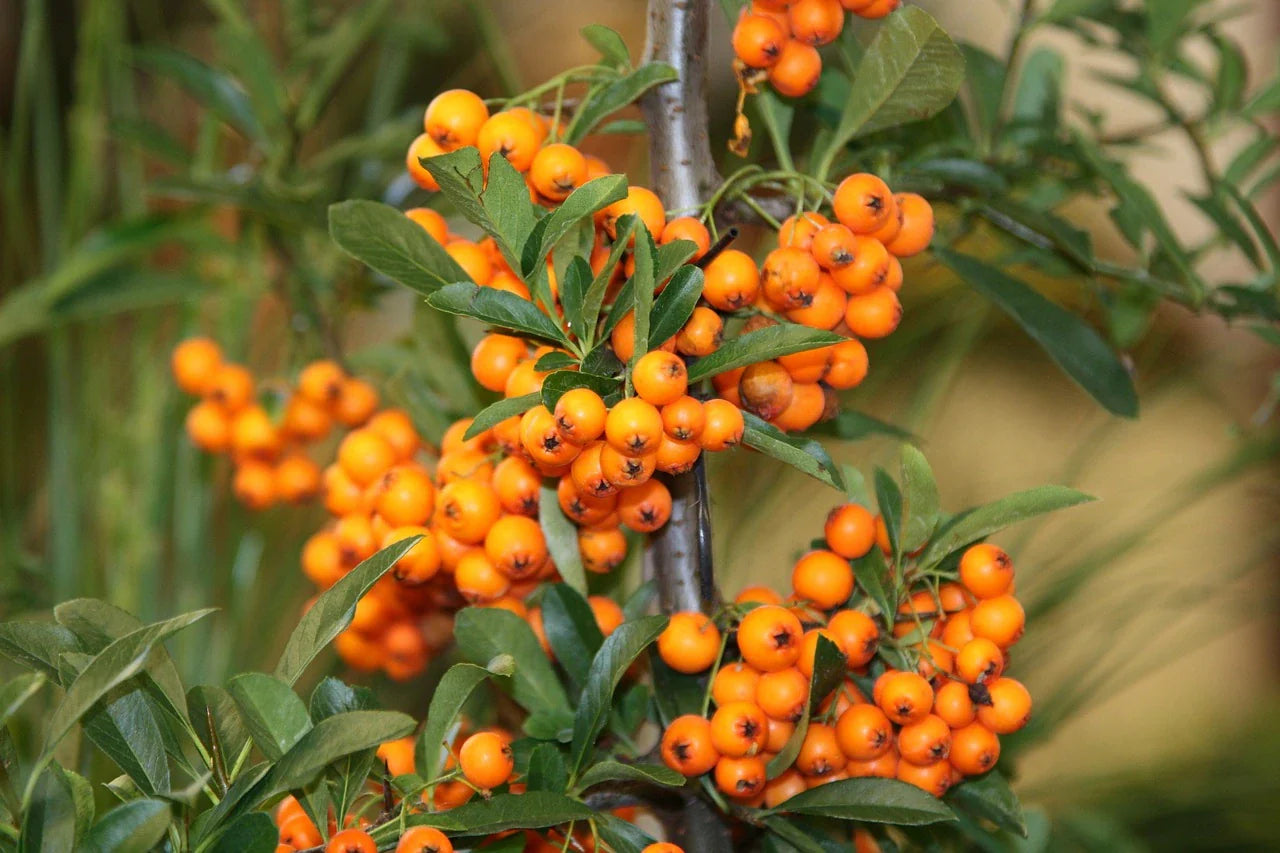
The rapidly evolving French sea buckthorn market is characterized by a duality between conventional and organic sectors, each offering specific opportunities in terms of yield, economic value, and outlets. Concentrated in the south-east of France, this promising crop is attracting the attention of market gardeners thanks to a growing demand for natural and local products, despite challenges related to production costs, international competition, and regulatory constraints.
Evolution of the French market
The French sea buckthorn market has seen mixed developments over the past three years. Conventionally, there has been relative stability in cultivated areas with a slight increase in volumes, mainly driven by demand from the food and cosmetics industries . The organic sector, for its part, is showing more sustained growth, driven by consumer enthusiasm for natural and local products . This trend is reflected in the economic valuation of organic products, with attractive sales prices such as organic sea buckthorn juice sold for between €40 and €55/litre .
- Conventional: Stable yields between 3,500 and 10,000 kg/ha
- Organic: Increase in cultivated areas, particularly in the Southern Alps
- General trend: Growing interest in high value-added derivative products (food supplements, cosmetics)
- Outlook: The market is expected to continue to grow, driven by demand for natural products and initiatives to structure the sector.
Current market status
The French sea buckthorn market currently presents an interesting duality between the conventional and organic sectors. In conventional terms, the market is relatively stable with cultivated areas that are changing little, mainly oriented towards supplying the agri-food and cosmetics industries . The organic sector, for its part, is experiencing marked dynamism, driven by growing consumer interest in natural products and their health benefits .
- Conventional: Potential yields of 3,500 to 10,000 kg/ha, consolidated outlets with industrial processors
- Organic: High economic value (juice sold between €40 and €55/L, oil up to €300/L), growing demand for derived products
- General trend: Despite a slight decline in sales in supermarkets, offset by growth in specialist organic channels and direct sales, the sea buckthorn market remains promising, with initiatives to structure the sector, particularly in the Southern Alps.
French production areas
Sea buckthorn is mainly grown in the South-East of France, particularly in the Southern Alps and the Rhône Valley . These regions offer ideal conditions for its cultivation, with a sunny climate and well-drained soils. The Hautes-Alpes region stands out in particular, with several producers developing local specialties based on sea buckthorn .
Key technical elements for growing sea buckthorn:
- Main varieties: 'Leikora', 'Novostj Altaja', 'Rockorange', 'Indian Summer' (females), 'Pollmix' (male)
- Agronomic conditions: well-drained soil, pH 6-7, sunny exposure
- Average yield: 3,500 to 10,000 kg/ha conventionally
- Production cycle: entry into production from 4-5 years
Trade and international opportunities
France occupies a relatively small position in global sea buckthorn production, but the market has interesting growth potential. The main producing and exporting countries are China, Russia and the Baltic countries . France mainly imports processed sea buckthorn products, including food supplements and cosmetic ingredients.
Opportunities for French producers:
- Conventional: Development of high value-added processed products (juices, syrups, jams) for the national market and export
- Organic: Strong growth potential in short supply chains and direct sales, with significant economic value (organic juice sold between €40 and €55/L)
- Diversification: Possibility of exploiting the different parts of the plant (fruits, leaves, oil) for the food, cosmetic and nutraceutical sectors
- Export: Opportunities in European markets, particularly Germany, the Netherlands and the United Kingdom, which are major consumers of sea buckthorn products
Profitability and financial aid
Production costs for organic sea buckthorn are generally 20 to 30% higher than for conventional production, mainly due to specific cultivation practices and a larger workforce . However, this difference is offset by higher selling prices, with organic juice sold for between €40 and €55/L . Profitability in conventional farming is stable, with potential yields of 3,500 to 10,000 kg/ha, while in organic farming it can reach 1.5 tonnes/ha . Financial aid is available for market gardeners, including combined aid of €1,588/ha for small farms producing vegetables and small fruits, as well as regional schemes such as in Bourgogne-Franche-Comté, offering up to €30,000 excluding tax in subsidies per year for investments in market gardening and small fruit crops.
Challenges and future prospects
Sea buckthorn production in France faces several challenges. In conventional production, international competition, particularly from China and the Baltic countries, is exerting downward pressure on prices . Phytosanitary risks, such as the decline of lavender which could affect sea buckthorn, require increased vigilance . In organic farming, stricter regulatory constraints and high production costs (15 to 20% higher than conventional) weigh on profitability .
Despite these obstacles, the outlook remains promising. Varietal innovation and agroecological practices offer opportunities to improve yields and quality. The market is expected to continue to grow, particularly in organic and short supply chains, with growing demand for natural and local products . Sea buckthorn, thanks to its versatility (food, cosmetic, nutraceutical), benefits from the consumer trend towards healthy and multifunctional products .
Recommendations for market gardeners
The integration of sea buckthorn into French market gardening operations represents a promising opportunity for diversification, offering interesting prospects for both organic and conventional farming. To succeed, market gardeners must adopt a strategic approach:
- Carefully assess the local market and potential opportunities before launching
- Choosing between organic and conventional based on available resources and farm objectives
- Invest in technical training to master the specificities of sea buckthorn cultivation
- Explore on-farm processing opportunities to maximize added value
- Develop partnerships with local processors or specialized distribution channels
- Stay abreast of varietal innovations and new cultivation practices
By adopting these recommendations, French market gardeners can take advantage of the potential of sea buckthorn while minimizing risks, thus ensuring profitable and sustainable diversification of their activity.
Partners for your project
To successfully start your sea buckthorn cultivation, trust the expertise of Bairiverse and Econome à Légumes. These specialized suppliers offer a rigorous selection of quality sea buckthorn plants, adapted to French conditions . Benefit from personalized advice on the choice of varieties, planting techniques and maintenance . With fast delivery throughout France and competitive prices, Bairiverse and Econome à Légumes support you from ordering to harvesting . Contact them now to obtain a personalized quote and start your sea buckthorn project with peace of mind.
Deliveries at Bairiverse: How does it work?
This site is a subsidiary of SARL Négo-Agro – Econome à Légumes. All our subsidiaries share the same logistics organisation, the same packaging standards and the same commercial team. We deliver across France, Switzerland and the Schengen Europe. For any delivery outside the Schengen Europe, please contact our commercial team via the contact page of this site for a tailored quote.
Delivery methods
Parcel / courier — for small to medium-sized orders. Your plants are packed in reinforced cardboard boxes and shipped via a reliable courier service. Packaging is adapted to the nature of the plant material to ensure integrity upon arrival.
Pallet — for large volumes. Each pallet is wrapped, secured and labelled by batch. This method is recommended for large-scale plantings and grouped orders.
The transport method (standard courier or refrigerated solution) is selected based on the nature of the plant material, weather conditions and the route. Unless you provide specific instructions, the shipping method is chosen by SARL Négo-Agro in accordance with standard market practice.
The seller reserves the right to split an order into several deliveries for legitimate reasons. The customer will be informed as soon as possible.
Lead times and tracking
The delivery lead time is confirmed in your order confirmation. As a guideline, allow 10 to 15 working days — this may vary depending on the season, volume, destination and weather conditions at the time of handling and transplanting.
Any modification to your order after confirmation will result in a revised delivery lead time, which will be communicated to you as soon as possible.
Once your order has been dispatched, you will receive a tracking number to follow your shipment in real time. Our commercial team remains available for any logistics query until full receipt of your order.
For large volumes and high-demand varieties, place your order in advance to secure availability.
Transport liability
Goods are transported at the buyer's risk and expense. SARL Négo-Agro's liability ends at the point of transfer of the goods to the carrier.
In the event of non-collection within the agreed timeframe, full payment remains due. SARL Négo-Agro will make every effort to keep the plants in the best possible storage conditions, without being held liable for any resulting damage.
Upon receipt
Please inspect your parcels upon delivery. Plant conformity is assessed on the basis of overall plant health and root system quality — not on the aesthetic appearance of the foliage or minor transport breakage with no impact on establishment.
Any claim regarding quantity or quality must be submitted within 10 calendar days of receipt. Claims relating to hidden defects must be raised within 3 calendar days of their discovery, with an explicit description and supporting evidence provided by the buyer.
Quote and contact
For any quote request or order-related question, please contact our team via the contact page of this site. We will get back to you within 48 hours.
Version 1.2 — April 2026
French Small Fruit Market in 2025
The berry market in France offers promising opportunities for market gardeners in 2025, thanks to growing demand for these prized fruits, both fresh and processed. Despite challenges related to climatic hazards, international competition, and production costs, producers can take advantage of regional specificities, financial support, and varietal innovations to develop this high-value-added sector, particularly in organic and short supply chains.
Presentation and commercial uses
Small red fruits include various species such as raspberries , gooseberries , blackcurrants and blueberries . They are generally shrubs or bushes producing edible berries appreciated for their taste and nutritional qualities . Their main commercial uses in France are:
- Fresh produce sales in markets and supermarkets, in high demand during the summer season
- Processing into jams, coulis, syrups and other derivative products
- Use in baking and catering
- Direct sales on the farm and through short supply chains, promoting local production
- Supplying the food industry (yogurts, desserts, etc.)
These fruits benefit from a positive image among consumers, associated with taste pleasure and health benefits . Their cultivation makes it possible to enhance the value of small agricultural areas, offering interesting opportunities for market gardeners .
Recent market developments
The French berry market has seen mixed developments in recent years. For the conventional market, there has been a slight increase in cultivated areas, particularly in Bourgogne-Franche-Comté, which accounts for 44% of national blackcurrant production . However, volumes have fluctuated due to climatic hazards. Regarding organic, despite a general downward trend in areas under conversion (-28% in 2022), the organic berry sector has held up better thanks to sustained demand . Certified organic areas increased by 8%, reflecting growing consumer interest in local organic products .
- Conventional market: Slight increase in surface area, variable volumes
- Organic market: Growth in certified areas (+8%), decrease in conversions
- Growing demand for local and organic products
- Organic fruit and vegetable market share stable at 6.7% in volume and 7.9% in value in 2024
- Less marked decline in volume purchases for organic fruit and vegetables compared to conventional ones
Current market status
The French berry market is currently experiencing mixed dynamics. For the conventional market, cultivated areas remain stable, with a slight upward trend for certain species such as strawberries. Production volumes fluctuate depending on climatic conditions, but there is growing demand for tropical fruits such as avocados, whose consumption reached 150,000 tonnes in 2023 . The organic market, meanwhile, is experiencing a slowdown after years of strong growth. Certified organic areas for fresh fruit will represent 30,269 ha in 2022, with a notable drop in conversions (-23%) . Despite this decline, organic still represents 27% of the French fruit-growing agricultural area, demonstrating a resilient sector in the face of current economic challenges .
- Conventional: Stability of surfaces, increasing demand for certain exotic fruits
- Organic: 30,269 ha certified, slowdown in conversions but maintenance of a significant share (27% of the fruit UAA)
- General trend: Decrease in volumes purchased (-10% organic, -6% conventional), but increase in the average basket
Producing regions and terroirs
The production of small fruits in France is concentrated in several key regions, each with its own specificities:
- Hauts-de-France: Leading gooseberry producing region (27% of national areas) . Aisne specializes in raspberries, Oise in blackcurrants, and Nord-Pas-de-Calais in strawberries .
- Rhône-Alpes: Main production area for raspberries and redcurrants .
- Burgundy: Important for blackcurrant cultivation, particularly in the communes of Arcenant, Echevronne, Fussey .
- Loire Valley: Diversified production, including blueberries, raspberries and redcurrants .
- Aquitaine and Limousin: Major areas for blueberries .
Favorable regional specificities include:
- Acidic to neutral, well-drained soils for most small fruits .
- Temperate climate with good sunshine, crucial for the development of aromas .
- Altitude (e.g. 900m on average in Velay) allowing for deseasonal production .
These varied conditions allow France to cultivate a wide range of small fruits, adapted to local terroirs.
Cultural requirements and varieties
Small fruits require specific growing conditions for optimal production. The main varieties grown in France include Gariguette and Mariguette for strawberries, and Patriot for blueberries . These fruits generally prefer well-drained soils, rich in organic matter, with a slightly acidic to neutral pH (5.5-7.0) . Irrigation is crucial, especially for strawberries and raspberries, with a drip system recommended . Planting density varies depending on the species: 30 cm between plants for strawberries, 100-150 cm for blueberries . Yields in organic farming are generally 20-30% lower than conventionally grown. Most small fruits come into production 1-2 years after planting and remain productive for 5-10 years, depending on the species and care .
Foreign trade and competition
France occupies a modest position on the international berry market, with insufficient production to meet domestic demand. Imports play a crucial role, particularly for raspberries and blueberries, where only 15% of consumption is covered by French production . The main suppliers are Spain, Peru, Chile, and Mexico, whose combined share reaches 51.4% of fresh berry imports . This dependence on imports exerts competitive pressure on French producers, particularly in terms of price, with Spain, for example, producing tomatoes at 1 euro less per kilo . However, this situation also offers opportunities for the development of local production, particularly in short supply chains and organic, to meet the growing demand for quality French products .
Development opportunities
The French berry market offers significant opportunities for local producers, both conventional and organic. For the conventional market, diversification into berries represents a promising growth strategy, allowing the exploitation of new segments and reducing the risks associated with a single production . The growing imports of raspberries (+100%), blackberries (+150%) and blueberries (+500%) over ten years reveal significant development potential for national production .
In the organic sector, despite a recent slowdown, opportunities remain numerous. Institutional aid, such as the "Ambition Bio 2017" program, aims to double the area under organic farming . Consumer demand for local and traceable organic products remains strong, offering opportunities in short supply chains, supermarkets and artisanal processing. Producers can benefit from investment aid from various organizations such as Regional Councils or FranceAgriMer to develop their organic projects .
Profitability and financial aid
Organic berry production has production costs that are approximately 20 to 30% higher than conventional production, mainly due to higher labor costs and generally lower yields . However, the selling prices of organic berries are on average 44% higher than their conventional equivalents, which helps to offset these additional costs . Potential profitability remains attractive, with gross margins reaching €15,000 to €20,000/ha for certain species such as raspberries or blueberries, compared to alternative crops such as cereals .
To support this sector, several aid schemes are available. Conversion aid (CAB) and maintenance aid (MAB) offer financial support to organic producers, with amounts varying depending on the crops . The organic tax credit, increased to €3,500, is also available to farms generating more than 40% of their income from organic products . In addition, an exceptional support fund of 105 million euros has been set up in 2024 to help organic farms that have suffered economic losses, demonstrating the commitment of public authorities to this promising sector.
Sector challenges and risks
The market for both conventional and organic berries is facing significant challenges. In the conventional sector, international competition, particularly from Poland, is exerting strong pressure on prices . Climatic hazards can lead to production losses ranging from 30 to 70% depending on the plots, while phytosanitary risks increase with a limited number of approved products . In addition, the presence of pesticide residues in more than 70% of conventional fruits raises concerns among consumers .
For the organic market, the main constraints are linked to high production costs, resulting from a more labor-intensive cultivation method . Strict regulations involve regular inspections and costly certifications. Competition is intensifying in the organic market, with supply growing faster than demand, putting downward pressure on prices . Organic berries cost 30% to 50% more than their conventional counterparts, which may hinder their adoption by consumers .
Innovations and future perspectives
The berry sector in France is experiencing a promising dynamic of innovation. Research is focusing on developing varieties that are more disease-resistant and adapted to climate change, such as the ever-bearing Kwanza raspberry or the Sekoya Pop blueberry . Agroecological practices are gaining ground, with the increasing adoption of techniques such as dynamic population management and participatory selection, allowing for better local adaptation of varieties .
By 2030, the market is expected to experience sustained growth, driven by changing eating habits and growing demand for healthy, local products . The goal of some brands, such as Pink Lady, to reach 100 million annual European consumers by 2030 illustrates this potential . The integration of advanced technologies, such as nanotechnology and precision agriculture, is also expected to revolutionize farming practices, improving yields and fruit quality .
Recommendations for market gardeners
Growing small fruits offers interesting opportunities for French market gardeners, but requires careful consideration before embarking on the venture. Advantages include growing demand, potentially high margins, and the opportunity to diversify production . However, this crop presents challenges such as high installation costs, sensitivity to climatic hazards and increased international competition .
For an informed decision, here are some recommendations:
- Carefully assess your land and water resources, which are essential for the success of these crops .
- Start small to test different varieties and techniques before investing heavily .
- Favor short circuits and direct sales to maximize margins .
- Consider organic certification to meet the growing demand for local and organic products .
- Learn specific growing and disease management techniques for these delicate fruits .
- Explore the financial assistance available for organic installation and conversion .
By taking a step-by-step approach and leveraging local resources and available support, integrating berries can become a major asset for your market gardening operation.
Specialist suppliers and consultants
For professional market gardeners looking for quality berry plants or advice on planting a plot, two specialist suppliers stand out on the French market:
- Bairiverse ( https://plantspetitsfruits.com/ ): Wholesale supplier offering a wide range of small fruit plants in various formats (mini-balls, pots, pots). They offer organic and conventional plants, with a responsive sales service and fast delivery throughout France .
- Econome à Légumes ( https://economealegumes.fr/ ): Trader in plants and plant material, offering producer prices and direct delivery to the farm. They supply organic and conventional plants, with a focus on quality and customer service .
These two companies not only offer quality plants, but also personalized technical support, advice on the choice of varieties and growing routes adapted to your project. Their expertise can prove invaluable in optimizing your berry production .
Bairiverse, your partner for market gardeners and small fruit producers
Why Choose Bairiverse as a Wholesale Partner in Small Fruit Plants for Market Gardeners and Farmers
For market gardeners, crop managers, and berry producers, ensuring a reliable, high-quality supply of plants is essential. Bairiverse positions itself as the specialized wholesale partner for berry plants, offering professional-quality products and technical expertise tailored to the needs of farms. Thanks to a wide variety of varieties, personalized advice, and seamless logistics, Bairiverse has established itself as a key supplier for berry producers throughout France.
Why Choose Bairiverse as Your Berry Plant Supplier?
Simple and seamless agricultural supply without complications
Bairiverse's mission is to simplify supply for farmers. With flexible logistics solutions, including 15-day delivery and responsive customer service, Bairiverse provides seamless access to quality berry plants without unnecessary complexity. This hassle-free process allows market gardeners to focus on their production rather than logistical challenges.
The widest range of berry plants in France
Bairiverse offers an extensive variety range in France, with plants sourced from specialized nurseries, guaranteeing professional quality and tailored to the needs of growers. This wide range includes conventional, organic, and untreated plants, and comes in various forms: bare root, 7 cm horticultural pot, mini-plugs, and honeycomb trays, among others. Bairiverse offers a personalized and varied solution for every berry grower.
Professional quality at direct producer prices
Market gardeners and crop managers benefit from unbeatable value for money with Bairiverse. By sourcing directly from the supplier, they benefit from volume-based pricing and optimal plant quality, adapted to professional standards. Bairiverse's positioning as a wholesaler with producer prices allows farms to maintain increased competitiveness.
Careful delivery adapted to farms
Delivery logistics are a key component for Bairiverse, with on-farm or direct-to-plot delivery services available, including the option of tailgate delivery for larger orders. By offering nationwide coverage and customized delivery options, Bairiverse ensures plants arrive in perfect condition and on time, ready for planting.
Technical advice and dedicated support for market gardeners
As an expert berry supplier, Bairiverse doesn't just sell plants; the team offers specialized technical support for market gardeners and berry producers, helping to optimize growing methods. With comprehensive technical itineraries and free personalized advice, crop managers can benefit from tailored support to improve the productivity and quality of their crops.
Products Available at Bairiverse
Bairiverse offers a complete range to meet the diverse needs of producers:
- Organic, conventional and untreated berry plants
- Mini-clods in a tray of 77 units
- 7 cm horticultural pots for easy planting
- Bare root plants, ideal for large areas and farms
- Professional quality plants adapted to the high standards of growers
Free Technical Support and Advice for Farmers
Bairiverse stands out by offering a free technical support service for producers. By providing no-obligation quotes and advice, the company helps farmers optimize their crops with solutions tailored to their specific needs. This unique service reinforces Bairiverse's added value as a trusted partner for farms.
Responsive Sales Service and Quality Customer Experience
Bairiverse's sales team stands out for its responsiveness and availability . Quote requests are processed in less than 48 hours, allowing customers to quickly plan their supply. This rapid service, combined with quality after-sales service, guarantees a serene and professional customer experience.
Bairiverse: Your Partner to Develop and Diversify Your Small Fruit Farm
By choosing Bairiverse, market gardeners and crop managers ensure a reliable, technical, and responsive partnership. The diversity of our offerings, technical support, and optimized logistics make Bairiverse an essential supplier for all growers specializing in berries. So, why wait? Plant your berry plot with the best plants, expert advice, and competitive prices.
FAQ for Bairiverse - Wholesale Partner in Small Fruit Plants for Market Gardeners and Farmers
What types of berry plants are available at Bairiverse?
Bairiverse offers a wide range of berry plants, including organic, conventional, and untreated plants. Options include bare-root plants, 7cm horticultural pots, plugs, and trays, allowing growers to choose the right varieties for their needs.
What are the benefits of choosing Bairiverse as your berry plant supplier?
Bairiverse offers flexible logistics with fast delivery within 15 days, a wide range of varieties, competitive producer-direct prices, and personalized technical support. This partnership simplifies procurement and helps farmers maintain quality production.
Does Bairiverse offer technical support for berry producers?
Yes, Bairiverse provides free, specialized technical support for market gardeners. Growers receive technical guidance, personalized advice, and assistance to optimize their growing methods and improve their productivity.
How are plants ordered from Bairiverse delivered?
Bairiverse offers delivery options tailored to farms, including direct delivery to the plot or farm, with the option of a tailgate option for large orders. This logistics ensures fast and secure delivery of plants.
What are the benefits of Bairiverse customer service?
Bairiverse provides a responsive sales team, processing quote requests in less than 48 hours and ensuring quality after-sales service. This responsiveness guarantees a smooth and professional customer experience.
Why is Bairiverse the ideal partner for diversifying a berry farm?
With a diverse offering, free technical advice, optimized logistics, and competitive prices, Bairiverse helps producers develop and diversify their berry crops. This partnership ensures consistent quality, technical support, and practical solutions tailored to the needs of each farm.